
- Trump allows crypto in 401(k) plans, impacting $12.5 trillion market.
- Push for diversification and higher returns in retirement portfolios.
- Regulatory updates required for full implementation.
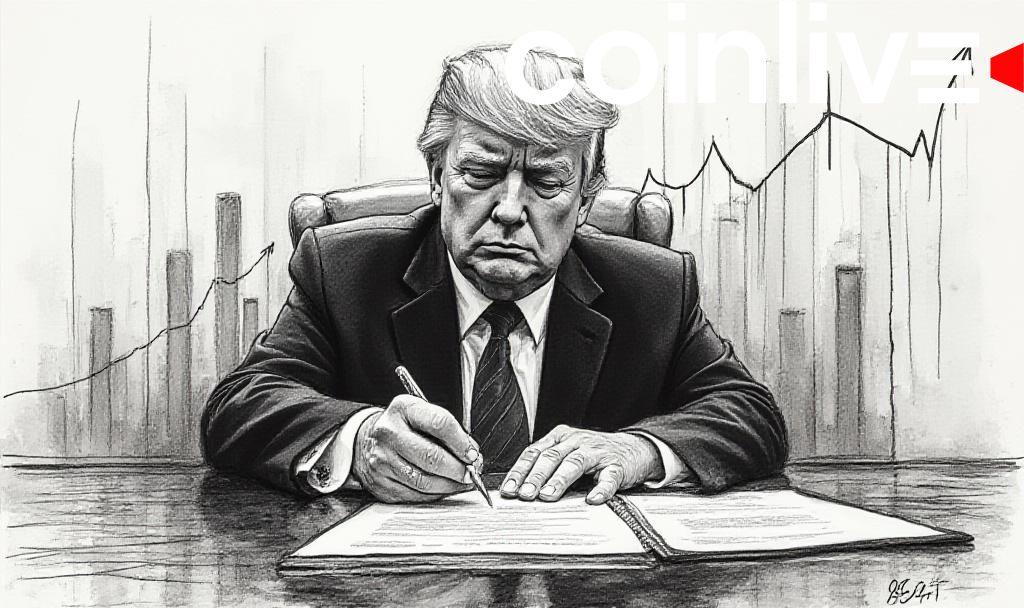
On August 7, 2025, President Donald Trump signed an executive order in Washington to expand 401(k) investment options, allowing cryptocurrency, private equity, and real estate inclusion for American retirement savers.

This action could unlock significant capital flows into the crypto market, impacting asset allocation and potentially altering retirement investment strategies across the $12.5 trillion 401(k) landscape.


President Trump has signed an executive order enabling crypto, private equity, and real estate inclusion in 401(k) plans. This decision affects the $12.5 trillion U.S. 401(k) market, creating new investment pathways for retirement savings.
The executive order directs major regulators like the Department of Labor, SEC, and Treasury to adjust rules, aiming for broader retirement asset choices in the U.S. Vanguard emphasizes risk education if such assets are integrated.
The order potentially unlocks significant funding opportunities for crypto and private equity managers. The U.S. 401(k) market, with vast asset pools, could soon include BTC and ETH among available investment options.
This move may redefine retirement investment approaches, encouraging participants to adopt high-risk asset classes. Although institutional adoption remains uncertain, the strategy suggests a significant shift in retirement planning. As President Donald J. Trump remarked, “President Donald J. Trump signed an Executive Order to allow 401(k) investors to access alternative assets for better returns and diversification.”
Private equity and real estate sectors are now more intertwined with retirement financing. Regulatory clarity will dictate product launches, influencing adoption rates and market dynamics.
Historical trends suggest cautious provider adoption due to potential legal concerns. Analysts emphasize the role of index funds for better-securing investor interests. Financial, regulatory, and technological outcomes hinge on how this policy integrates with existing frameworks.