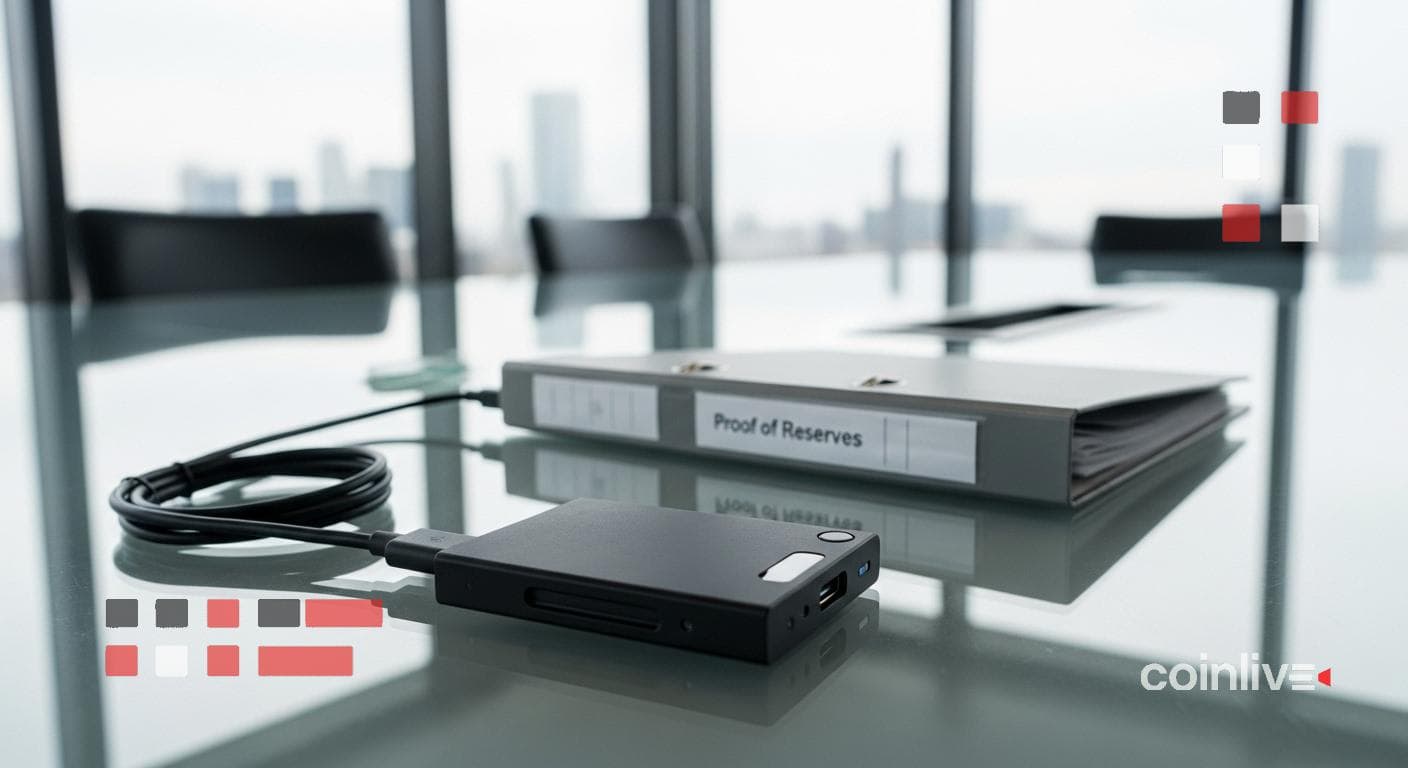
Binance released its 39th Proof of Reserves report, based on a snapshot dated Feb. 1. The update formalizes that a new monthly disclosure has been produced and timestamped.
This type of disclosure is a point-in-time view of on-chain holdings rather than a full financial statement, and no reserve ratios, liability totals, or third-party audit assurance details are provided in the material reviewed for this article. As a result, any interpretation must distinguish between what is confirmed by the timestamped snapshot and what remains outside its scope.
What Binance’s 39th Proof of Reserves confirms now
The 39th update confirms continuity of Binance’s recurring reserve disclosures and sets Feb. 1 as the reference date. In practice, the label “Binance 39th Proof of Reserves” signals that a fresh snapshot exists for users and counterparties to reference.
Readers typically look to such reports to gauge the platform’s on-chain balances for major assets such as Bitcoin (BTC) and Tether (USDT) at the time of the snapshot. However, no asset-by-asset breakdowns or reserve percentages are included here, and nothing in this summary indicates whether additional assurance or controls testing accompanied the snapshot.
The report’s existence and date stamping are the primary confirmed facts. Other trust-critical elements, like how liabilities are measured, which legal entities are in scope, and whether independent testing was performed, are not described in the information available for this article and are addressed below in terms of what remains unclear.
Why the Feb. 1 snapshot matters to users
A dated snapshot provides a fixed, comparable reference point during market swings, allowing observers to anchor any subsequent changes in reported holdings to a specific moment. For users, a clear timestamp can help contextualize movements between snapshots without implying ongoing coverage beyond that date.
Commentary from industry publications has questioned the adequacy of asset-only disclosures and the need to understand scope and methods before drawing conclusions. As reported by Cointelegraph, Binance’s prior proof-of-reserves approach “raises red flags.”
Assets vs liabilities: what’s disclosed and what remains unclear
According to Decrypt, former SEC enforcement official John Reed Stark has criticized earlier exchange-style proof-of-reserves approaches for omitting liabilities, not evaluating internal financial controls, and providing no clear assurance opinion, gaps that make it difficult to assess solvency and the quality of any third-party audit assurance. These themes frame today’s key user questions: whether customer liabilities are measured and verified, whether controls are tested, and how comprehensively the organization is covered.


As reported by Fortune, recurring exchange snapshots are viewed by some observers as welcome transparency but only partial progress, not a substitute for a comprehensive financial audit of both assets and liabilities under established standards. That distinction matters because users often conflate on-chain balances with a full balance-sheet view, which requires independently verified liabilities and tested controls.
For this 39th report specifically, the information summarized here does not state whether liabilities were included or independently verified, whether internal controls were tested, or which corporate entities and token types are definitively in scope. Without those details, the snapshot should be read as a time-bound disclosure of holdings rather than a full-scope audit or assurance engagement.
At the time of this writing, as reported by Futu News on Feb. 24, the broader crypto market showed downward volatility, with Bitcoin declining about 3.92% intraday. This backdrop helps explain why users focus on the exact timestamp and scope of any proof-of-reserves disclosure.
| Disclaimer: The information provided in this article is for informational purposes only and does not constitute financial, investment, legal, or trading advice. Cryptocurrency markets are highly volatile and involve risk. Readers should conduct their own research and consult with a qualified professional before making any investment decisions. The publisher is not responsible for any losses incurred as a result of reliance on the information contained herein. |