


Binance Reportedly Developed WLFI Stablecoin Code
Analysis of Binance’s and Trump family’s involvement in WLFI’s USD1 stablecoin and its impact on the cryptocurrency market dynamics.
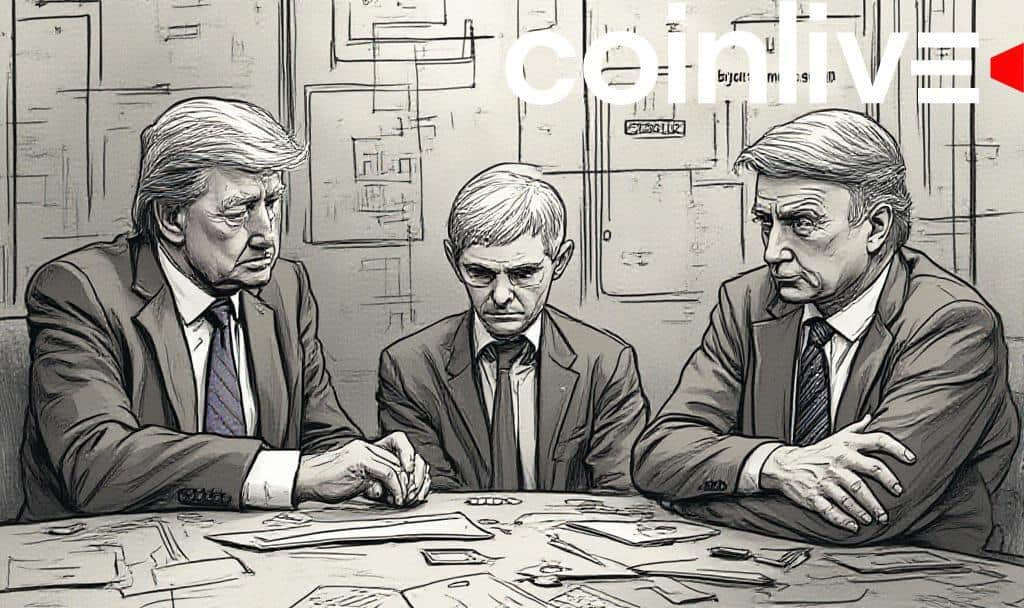
- Binance’s role in USD1 creation raises transparency concerns.
- Trump family’s influence amplifies market interest.
- Potential regulatory scrutiny due to political connections.

Binance is reported to have contributed to the development of WLFI’s USD1 stablecoin, with involvement from the Trump family, impacting the cryptocurrency market dynamics significantly.
The intersection of Binance’s technological capabilities and the Trump family’s political presence presents unique market challenges, potentially influencing regulatory dynamics and investor behavior.
World Liberty Financial’s USD1 stablecoin, reportedly coded by Binance, is gaining attention due to its political backing and financial implications.
Binance, one of the largest cryptocurrency exchanges, allegedly aided in technical deployment, with the Trump family associated through WLFI’s leadership.
“USD1 is designed for large institutional settlements, exemplified by the $2 billion deal with MGX.” — Eric Trump, Co-Founder, World Liberty Financial
The involvement of major players highlights potential conflict of interest as the stablecoin reportedly supports large transactions, including a $2 billion deal with MGX. The supply is majorly concentrated in Binance-controlled wallets, offering perspectives on market influence.
Financially, USD1’s deployment impacts its market perception, raising concerns over possible political advantages. The Trump family’s association complicates regulatory narratives.
Potential outcomes include increased regulatory oversight given the political ties and significant economic ventures, which could lead to tech-market integration challenges. As precedence with other stablecoins has shown, transparency remains pivotal in addressing industry concerns. Understanding both financial and technological dynamics will be crucial in navigating this evolving scenario. The situation underscores the strategic importance of regulatory compliance for all involved parties and highlights the delicate balance between political influence and technological advancement within the cryptocurrency realm.
More From Crypto News

Solana Sets Oct. 21 Alpenglow Handover With 82% Staked SOL Threshold
Solana has set October 21 as the handover date for Alpenglow, its proposed consensus upgrade, with the transition contingent on support from 82% of staked SOL.

Starknet Eyes L1 Shift and Quantum Resistance by 2027
Starknet is exploring a potential transition from an Ethereum Layer 2 scaling network to an independent Layer 1 blockchain, with quantum-resistant cryptography...

EPIC and QUICK Fall After Binance Delisting Announcement
Binance announced the upcoming delistings of EPIC and QUICK, sending both tokens lower as traders responded to the loss of access on one of crypto’s largest exc...

Ripple Adds DriveWealth and Meritz as Securities-Market Partners
Ripple has added DriveWealth, a US-based brokerage infrastructure provider, and Meritz, a South Korean financial firm, as securities-market partners, extending...

XRP Whale Activity on Binance Nears August Outflow Gap
XRP whale activity on Binance is picking up, with the exchange’s outflow gap narrowing toward levels last seen in August. The shift marks a meaningful change in...

US-Listed SUI ETFs Log Five Straight Weeks of Inflows
US-listed SUI exchange-traded funds have logged net inflows for five consecutive weeks, according to reporting from CryptoPotato and CryptoRank, signaling susta...
