


Massive Crypto Crash Liquidates $9.89B in October 2025
Crypto Market Crash October 2025: Crypto market faced a dramatic $9.89 billion liquidation on October 10, 2025, affecting BTC, UNI, AAVE, AVAX, and DOGE.
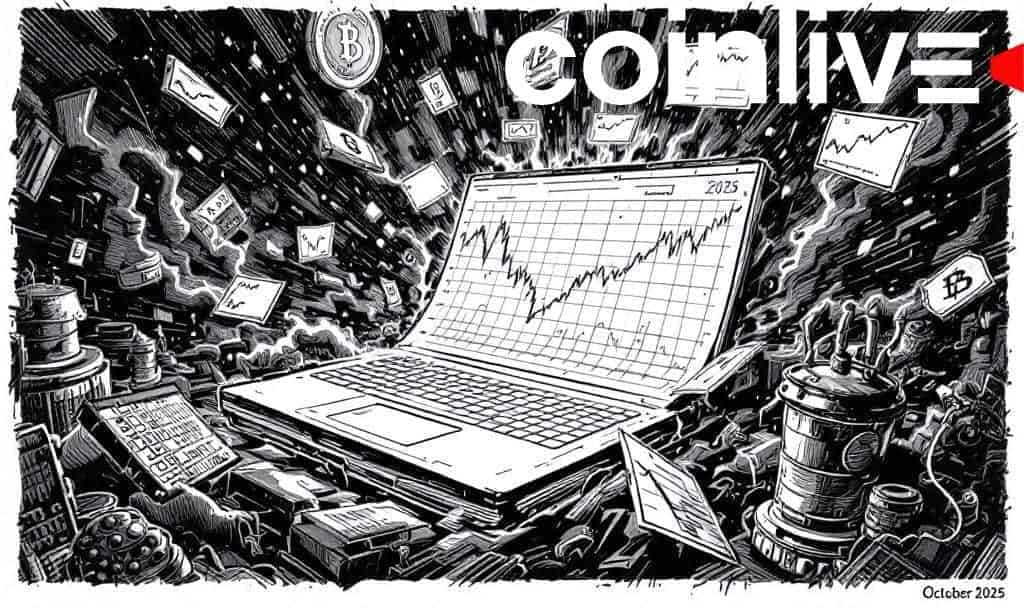
- Record $9.89 billion liquidation in crypto market.
- Algorithmic cascades caused a massive impact.
- BTC and altcoins faced significant losses.

On October 10, 2025, a massive crypto market crash liquidated $3.21 billion in positions, escalating to $9.89 billion over 14 hours, primarily affecting Bitcoin and major altcoins.
The crash underscored the risks of leveraged trading, with Bitcoin declining 6.84% and altcoins like AAVE and UNI experiencing more severe downturns, highlighting volatility.
Crypto Market Crash
On October 10, 2025, a massive crypto market crash occurred, leading to the liquidation of $9.89 billion in positions over 14 hours. The event accelerated with leveraged position unwinds and liquidity evaporation within a 40-minute window. This catastrophic event resulted in significant losses, creating shockwaves throughout the financial world. The high leverage and market structure were key factors in the dramatic downturn, according to CoinDesk’s analysis of the situation.
The crash involved no direct statements from key industry leaders. No previous records tie the leaders to specific roles during this incident as no official reports were available from primary sources like Twitter or government portals.
Immediate Effects on Cryptocurrencies
The immediate effects hit cryptocurrencies hard; BTC dropped 6.84% in its value while altcoins such as UNI, AAVE, AVAX, and DOGE witnessed even steeper declines, with some losing over 60% in their worth. This event highlights the financial vulnerability of relying heavily on leverage in the crypto market, as demonstrated by the open interest collapse and significant order book depth reduction during this period.
Regulatory and Technological Considerations
Despite the crash, no regulatory action or official comment has been noted, pointing to the complex nature of market self-regulation in the absence of formal oversight. The lack of statements from institutions like the SEC highlights this. Observers suggest potential future technological adjustments might mitigate similar occurrences, with algorithmic changes possibly playing a role. Effective management could stabilize the market during highly leveraged scenarios and extreme volatility.
More From Crypto News

Crypto.com and Novig Sue Missouri Over Sports Betting Prediction Markets
Crypto. com and sports prediction startup Novig have filed a court challenge against Missouri, contesting the state’s position that their sports-event predictio...

Cross River Integrates Ripple’s RLUSD Into Core Banking Platform
RLUSD is Ripple’s dollar-pegged stablecoin, designed to facilitate institutional payment and settlement workflows.

Crypto Market Cap Rose 39% in Q3, Ending Losing Streak: Report
The global crypto market capitalization posted a 39% gain in Q3, snapping a three-consecutive-quarter losing streak, according to a CoinGecko industry report. T...

Ledger Implant Thieves Steal $4.8M Bitcoin From Task Scam Operator
Blockchain analytics firm Chainalysis has identified one of the largest victims of the Ledger hardware-wallet implant theft as a task scam operator, who lost mo...

Zcash NU7 Rules Would Block Sprout Pool Spending
Zcash’s proposed NU7 network upgrade would permanently block spending from the Sprout pool by invalidating version 4 transactions, the only transaction format t...

Aave Ethereum V3 Umbrella Stakes Fall 9.67% to $116.09M
Aave Umbrella is the protocol’s safety backstop mechanism on Ethereum V3, where participants stake assets to cover potential shortfalls. The tracked stake figur...
