


Decrypted Law: The CBDC Conversation Leader Advantage, Jan 10–17
NewsStrong move by US Representative Tom Emmer and a possible risk of one more crypto ban in Asia: a recap of final week’s top rated crypto policy stories is at thi...
[ad_1]
Strong move by US Representative Tom Emmer and a possible risk of one more crypto ban in Asia: a recap of final week’s top rated crypto policy stories is at this.
News
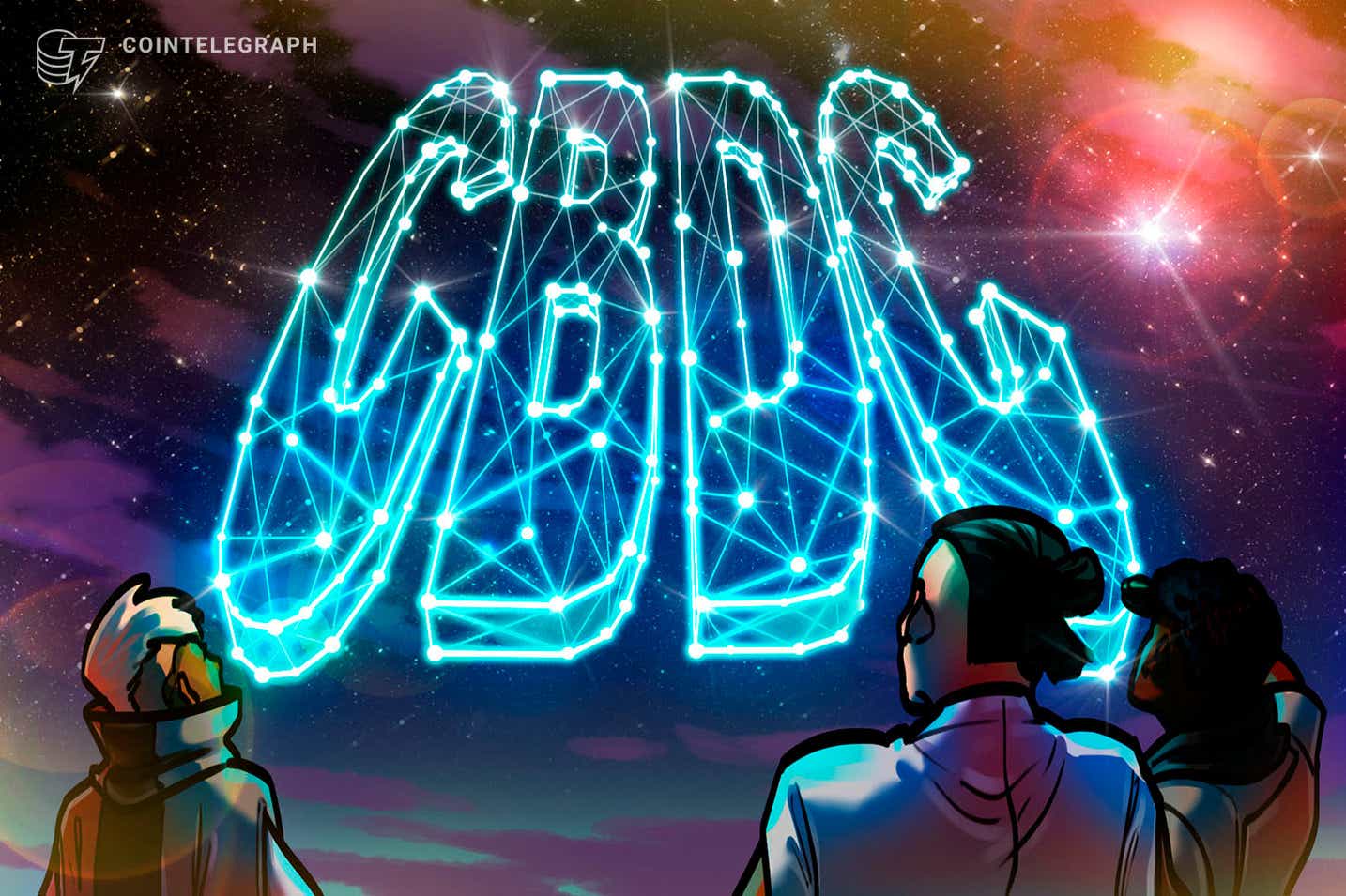
Last week noticed an unlikely to start with move in the opening narrative battle close to a possible US central financial institution digital currency: Rep. The thought is to legally restrict the Federal Reserve’s potential to situation retail CBDCs and get on the function of a retail financial institution. This could be of wonderful consequence as we have nonetheless to see a similarly clear manifestation of an opposing stance. In truth, it truly is not even clear if other US lawmakers get a powerful stance on the matter, possibly condemning privately issued stablecoins as a digital different to dollar. By treating the Fed’s possible CBDC as a privacy risk to start with, Emmer could tilt the conversation in a pleasant route to the significantly less centralized models of digital currencies.
Below is a short edition of the hottest “Deciphered Laws” newsletter. For total particulars on final week’s policy developments, signal up for the total newsletter under.
US Representative vs. US CBDC
The stress in between decentralized digital currency and state-issued CBDCs is at the heart of the ongoing worldwide shift to digital payments rails. Last week marked the to start with time a sitting US Congress member took an official stance towards possible retail CBDC moves by the Federal Reserve.
The Sovereign Digital Fiat is absolutely extra easy than its analog predecessor, but the privacy expenditures of this kind of ease can be massive. If all funds have been CBDCs, the government’s potential to keep track of finances would turn out to be nearly limitless, denying anyone the anonymity that funds transactions when had. Representative Emmer cited these privacy worries as the explanation for introducing a bill that would ban the Fed from issuing CBDCs immediately to individuals and working as a retail financial institution.
While it may possibly get a prolonged time just before Emmer’s initiative reaches the House of Commons, the mere articulation of this kind of place by a member of Congress can have a substantial effect on the policy discussion close to the planet. close to a possible CBDC. This is specially accurate as a quantity of top rated Fed officials have stated their willingness to delay the matter just before Congress.
Another Scary Ban, Another El Salvador
Elsewhere in the planet, signals that different regulators have sent above the previous week stage to the probability of banning crypto exchanges in Pakistan to consideration of scaling back the Bitcoin bidding move below legal type of El Salvador in Tonga. Pakistan’s move in the direction of a blanket ban follows a acquainted situation as the country’s central financial institution actively pledges to ban cryptocurrency exchanges and punish crypto exchanges. The undertaking of figuring out the legal standing of cryptocurrencies rested with the High Court of Sindh Province, but the judges declined to make a ultimate phone and referred the matter to specialized government ministries.
On the opposite finish of the regulatory spectrum, the island nation of Tonga may possibly quickly be embarking on the path of Bitcoin adoption. An announcement by Lord Fusitu’a, a former Tongan member of parliament and chairman of many inter-regional parliamentary groups, suggests that the nation could legal tender for Bitcoin as early as late 2022. Given that Tongans depend heavily on remittances, replicating El Salvador’s move virtually the very same looks fair.
IMF sees collapse of crypto hedge function
Among the a lot of danger components that analysts have attributed to digital assets above the many years, monetary stability dangers stemming from the increasing correlation of cryptocurrencies with the emerging equity markets. as a novelty. However, this is what a crew of International Monetary Fund researchers concluded when examining Bitcoin’s dynamics with the S&P 500 index correlation. The authors argue that the connection is rising. in between the two assets loses the hedge perform of cryptocurrencies, as it no longer serves to diversify investors’ danger. The conclusions of the IMF analysts make a logical stage that a coordinated, worldwide technique is essential to regulate cryptocurrencies.
[ad_2]
More From Market

Polkadot (DOT) Rises 4.14% in 24 Hours: What the Data Shows
Polkadot (DOT) is trading at $0.689902, up 4.14% in the past 24 hours, according to CoinGecko data as of 06:52 UTC on November 27, 2026.

NEAR Protocol (NEAR) Falls 5.27% in 24 Hours: What the Data Shows
NEAR Protocol (NEAR) is trading at $2.85, down 5.27% in the past 24 hours, according to CoinGecko data as of 04:51 UTC on November 25, 2026.

Midnight (NIGHT) Rises 5.08% in 24 Hours: What the Data Shows
Midnight (NIGHT) traded at $0.04447256 as of 00:47 UTC on November 22, 2026, up 5.08% over the prior 24 hours, according to CoinGecko data.

Why Is Zcash (ZEC) Price Down Today?
Zcash is facing selling pressure amid reported governance and derivatives-market concerns.

Why Is Aster (ASTER) Price Down Today?
Aster (ASTER) is trading at $0.5632, down 3.04% in the past 24 hours, according to CoinGecko data as of 02:28 UTC on November 18, 2026 .

Why Is Injective (INJ) Price Up Today?
In its official X announcement , Injective Protocol wrote: “INJ is on Nasdaq. $INJC, the first US ETF for $INJ, went live Thursday with staking built in, and on...

Author
Kishu Inu
Kishu Inu reports on crypto market activity, Web3 project updates, and blockchain business developments for CoinLive.