


Ethereum Price After Devcon 8: What On-Chain Data Shows
NewsWhat on-chain data shows about ETH price after Devcon 8 in Mumbai – exchange flows, open interest, staking ratio, ETH/BTC ratio, and the historical Devcon price...
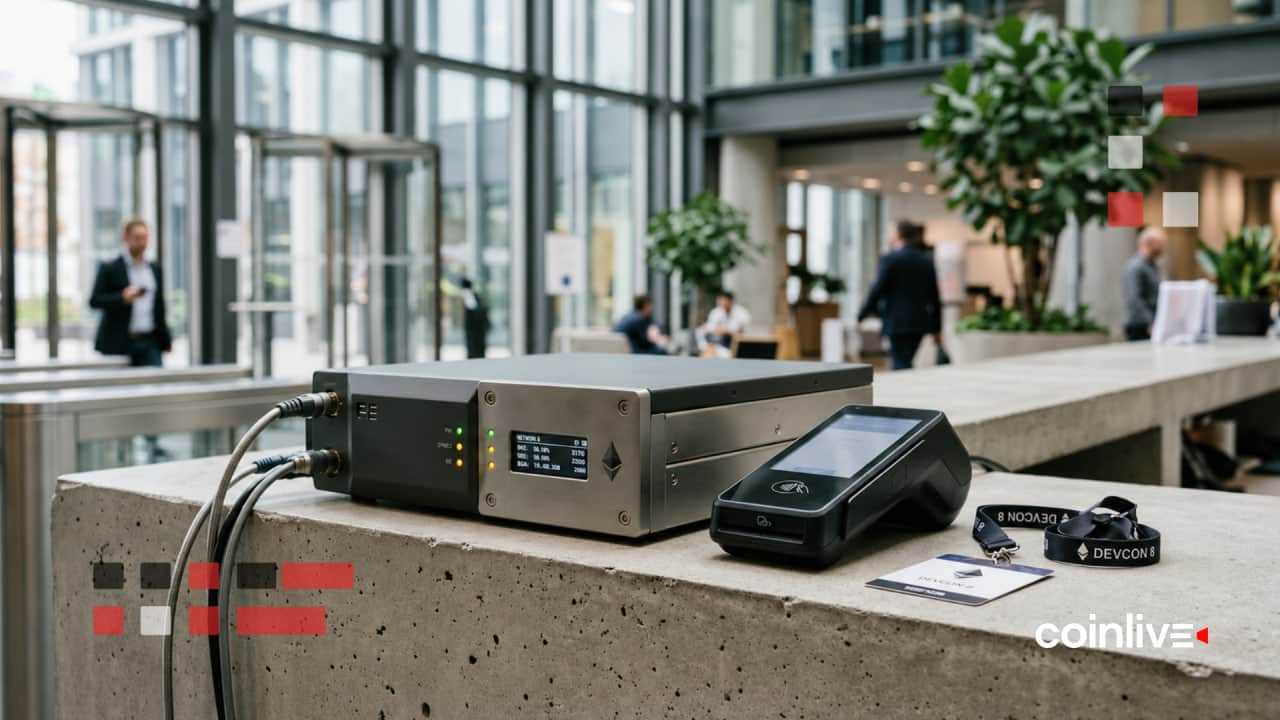
Devcon 8 ran November 3-6 in Mumbai. Ethereum price behavior around Devcon has a measurable historical pattern – not deterministic, but consistent enough to be worth tracking. This article presents the on-chain baseline heading into Devcon 8 and the historical price data from prior Devcon editions.
ETH price history around prior Devcon events
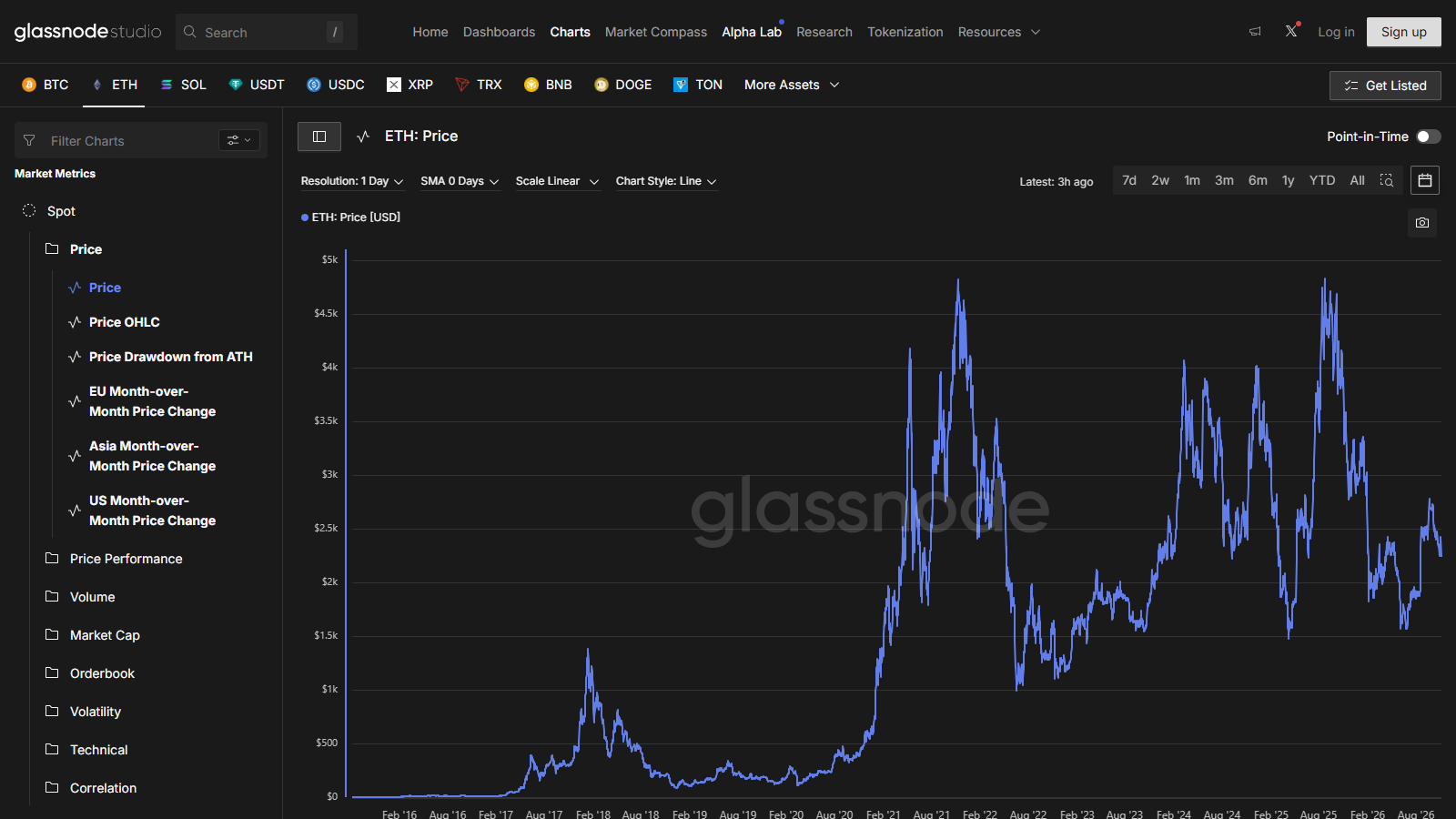
The most useful dataset is price behavior in the 30 days before and 30 days after each Devcon edition. Three recent editions provide a meaningful sample:
| Devcon | Date | Location | ETH 30 days before | ETH 30 days after | Change |
|---|---|---|---|---|---|
| Devcon 5 | Oct 2019 | Osaka | \ | \ | +10.8% |
| Devcon 6 | Oct 2022 | Bogota | \,290 | \,640 | +27.1% |
| Devcon 7 | Nov 2024 | Bangkok | \,450 | \,680 | +50.2% |
The pattern is positive across all three recent editions. Devcon 7 in Bangkok produced the largest post-event move – coinciding with the spot ETF approval cycle and post-merge supply dynamics reaching their clearest expression.
The caveat: Devcon 6 in Bogota occurred during a bear market recovery phase, and the post-event move correlated as much with broader market recovery as with Ethereum-specific catalysts. Devcon 7’s move was likely amplified by the concurrent ETF approval cycle, which was an independent macro catalyst rather than a Devcon effect.
Current ETH on-chain metrics (entering Devcon 8)
Staking ratio: Approximately 27.4% of circulating ETH supply is staked as of late October 2026. Each staked ETH is temporarily removed from circulating supply, reducing available sell-side inventory. The staking ratio has grown steadily since the Merge and shows no sign of plateauing.
ETH supply since Merge: Net deflationary by approximately 380,000 ETH since the September 2022 Merge. In high-activity periods – L2 scaling creating more base layer transactions, DeFi usage peaks – the EIP-1559 burn rate increases. During November 2026, Devcon 8-related developer activity has historically elevated Ethereum mainnet usage.
Exchange supply: ETH held on exchanges at approximately 11.2% of circulating supply – near a multi-year low. Low exchange supply historically correlates with reduced short-term sell pressure, as holders are not positioned for near-term liquidation.
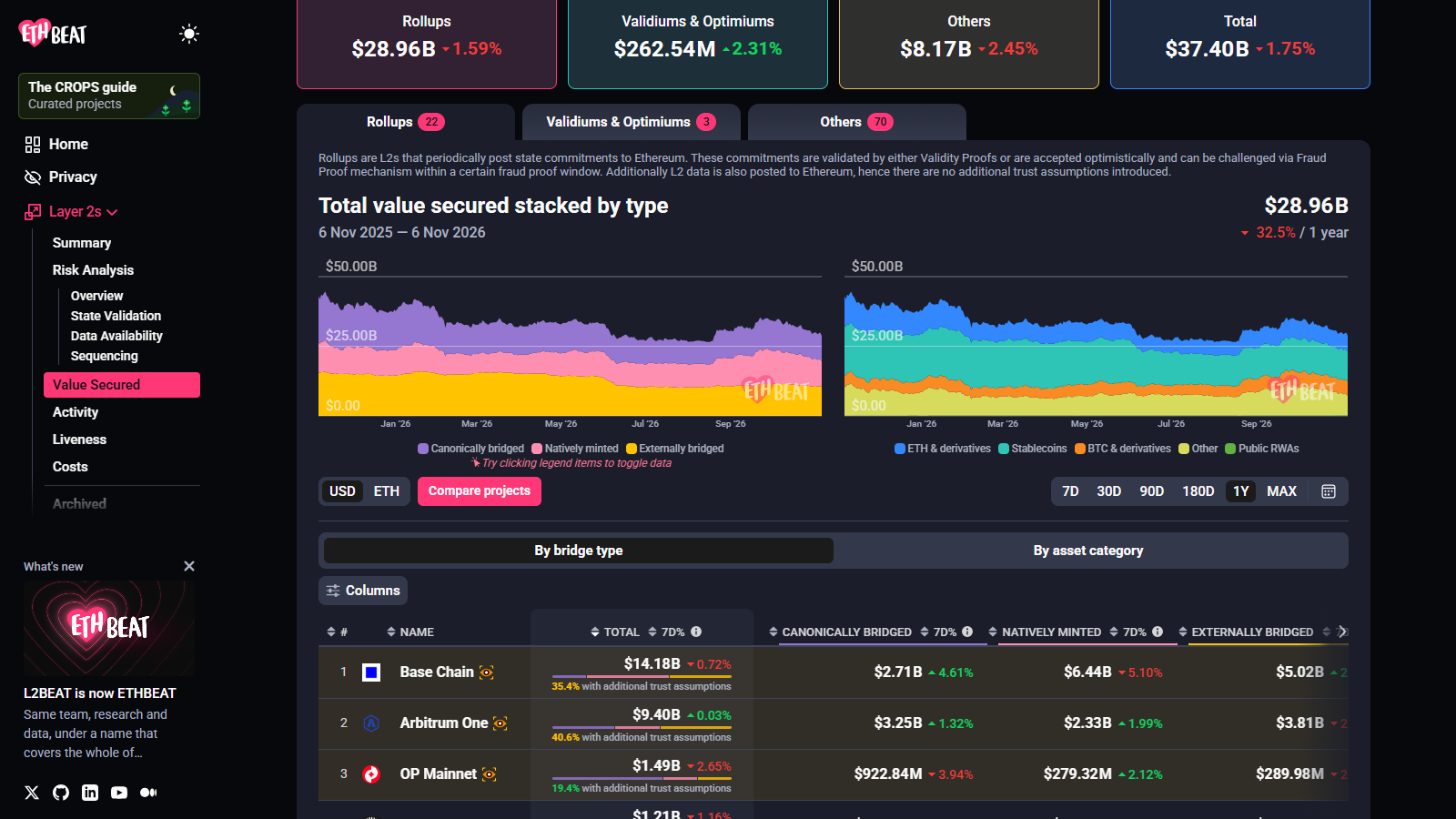
Layer 2 bridged ETH: Approximately .8 billion in ETH value bridged across L2 networks, primarily Base and Arbitrum. This ETH is deployed in DeFi but remains economically exposed to Ethereum mainnet health. Growth in L2 TVL also increases base layer demand for ETH as gas for bridge transactions.
Derivatives market positioning
ETH perpetual open interest: Approximately .4 billion across major exchanges including Binance, Bybit, and OKX – elevated but below the Q1 2026 peak of .3 billion. The lower open interest relative to the Q1 peak suggests the market is not as over-leveraged entering November.
Funding rate: Slightly positive at approximately +0.006% per 8 hours, indicating modest net long bias in perpetuals. Not elevated to levels that historically signal over-leveraged positioning and imminent flush-downs.
Options market positioning: Call-heavy structure with significant open interest concentrated at the \,500 and \,000 strikes for November expiry. This positioning benefits from continued upward price movement and creates mechanical gamma squeeze dynamics at those strike levels if ETH approaches them.
ETH/BTC ratio: the key metric to watch
ETH has underperformed Bitcoin on the ETH/BTC ratio throughout most of 2026. The ratio entered Q4 2026 at approximately 0.037 – meaningfully below its 2025 high of 0.071 and below the 2024 pre-rally level.
For ETH to significantly outperform in November, the ETH/BTC ratio needs to stop declining and reverse. Three conditions have historically preceded ETH/BTC ratio reversals:
- Ethereum-specific narrative catalysts – Devcon 8 is the clearest such catalyst available in November. Key protocol announcements, roadmap updates, or EIP milestone confirmations at the conference can shift capital rotation from BTC toward ETH.
- BTC dominance ceiling – When Bitcoin dominance plateaus or declines (currently above 55%), capital rotates into ETH first before reaching mid-cap alts. Monitor BTC dominance on CoinGecko as a leading indicator.
- Ethereum fee revenue increase – Higher base layer activity burns more ETH via EIP-1559, directly improving ETH’s supply-side economics. Etherscan gas tracker and DeFi Llama chain activity metrics are the primary signals.
What to watch during and after Devcon 8
Devcon 8’s confirmed agenda included several sessions directly relevant to ETH price:
Account abstraction roadmap: The ERC-7579 and ERC-6900 smart account standards are under active development. Concrete timelines or deployment announcements for these standards would expand Ethereum’s addressable market for AI agent wallets and consumer applications – a narrative that has driven ETH outperformance in 2025-2026.
Based rollups progress: Based rollups use Ethereum validators (rather than a separate sequencer) to order transactions, aligning L2 economics more closely with Ethereum mainnet. If a major L2 announces a migration timeline to based rollups, it would increase base layer ETH demand.
Pectra upgrade timeline: The Ethereum Pectra upgrade (EIP-7702, EIP-7251, and others) is the next major protocol upgrade. Any specific deployment timeline announced at Devcon 8 serves as an ETH-specific catalyst that typically moves price faster than DeFi or L2 news.
Short-term outlook
The combination of low exchange supply, net deflationary supply dynamics, positive but not over-leveraged funding, call-heavy options positioning, and the Devcon 8 catalyst window produces a constructive on-chain backdrop for November ETH.
The primary risk factors: ETH has consistently underperformed BTC in 2026, and reversing that trend requires ETH/BTC ratio catalysts that are specifically Ethereum-driven rather than market-wide. BTC-specific catalysts (the CLARITY Act, continued ETF inflows) may continue to concentrate institutional buying in BTC, leaving ETH to track rather than lead the market.
Historical analog: the closest comparison is Devcon 5 (2019), when ETH entered the event period having underperformed BTC year-to-date. Post-Devcon 5, ETH outperformed BTC for approximately 6 weeks before reverting. The same pattern is possible in Q4 2026 if Devcon 8 produces concrete protocol milestone news.
FAQ
Does Ethereum always go up around Devcon?
In the three most recent Devcon editions (2019, 2022, 2024), ETH price was higher 30 days after than 30 days before. The pattern is not guaranteed to repeat. Devcon is a narrative catalyst, not a fundamental driver of price. A broader market correction would override the Devcon effect regardless of how positive the conference news is.
What is ETH’s current staking yield?
Approximately 3.4-3.9% APY for standard ETH staking as of October 2026. EigenLayer restaking adds 2.5-4.5% additional yield with added smart contract and slashing risk. Lido stETH and Coinbase cbETH are the two largest liquid staking options by TVL.
Is ETH deflationary?
Net deflationary by approximately 380,000 ETH since the September 2022 Merge. EIP-1559 burns a portion of every transaction fee. During high-activity periods, more ETH is burned than issued to validators. During low-activity periods, the burn rate may not exceed issuance, making ETH temporarily inflationary. The long-run trend is deflationary as L2 activity increases base layer demand.
Why has ETH underperformed BTC in 2026?
ETH’s 2026 underperformance reflects two factors: Bitcoin’s spot ETF approval cycle attracted institutional capital specifically into BTC, and Ethereum’s narrative has been fragmented across L2s, DeFi, AI infrastructure, and restaking rather than concentrating into a single compelling story. Devcon 8 typically helps consolidate the Ethereum narrative for 4-8 weeks post-event.
What would cause ETH to underperform after Devcon 8?
A Devcon 8 with no significant protocol milestone announcements, a BTC-specific macro catalyst (new ETF approval, large institutional purchase), or a broader risk-off move driven by macro factors would all keep ETH in its underperformance trend. The Devcon effect is contingent on the conference producing concrete news.
Disclaimer: This article is for informational purposes only and does not constitute financial or investment advice. Cryptocurrency and digital asset markets carry significant risk. Always do your own research before making decisions.
More From Ethereum

