
[ad_1]
Self-governing wallets give cryptocurrency users the power that centralization could never give – sovereignty. They allow people to own digital assets without having to rely on intermediaries. However, governments are starting to push back.


Regulations targeting these wallets are becoming increasingly common, with Brazil’s recent move to restrict the transfer of stablecoins to self-custodial wallets being a prime example.
Why Are Self-Hosted Wallets Important?
This war raises important questions. Can self-governing wallets survive the increasingly stringent regulatory scrutiny? Or will institutional influence push users back to centralized systems?
Self-custodial wallets allow users to hold their cryptocurrencies directly. Unlike custodial wallets that depend on 3rd party platforms, self-custody gives users complete control. This arrangement protects against risks such as exchange failure, which was evident in the FTX collapse.
These wallets are at the heart of the decentralized spirit of cryptocurrency. They allow users to make transactions without intermediaries, providing the highest level of privacy and financial freedom.
Self-storage wallets are a key component to increasing financial sovereignty, privacy and security for users,” Hester Bruikman, Product Manager at ConsenSys’ MetaMask, shared with TinTucBitcoin in an interview. question.
In contrast, custodial wallets come with counterparty risks. If the provider fails or is attacked, users can lose access to their assets. Self-governance completely eliminates this risk, helping users keep their assets safe.
Despite their many benefits, these wallets still face criticism for being complex and dangerous. Recent innovations are trying to change that, with smart contract accounts (SCAs) leading the revolution. SCA eliminates the need for a single key, replacing it with flexible recovery methods such as secret keys and multi-party computation.
“Advanced security models, leveraging artificial intelligence and on-chain intelligence, now make it easy for users to protect themselves before taking action,” Bruikman said.
These advances reduce risk, allowing people to more safely explore new Web3 applications.
Other improvements include eliminating gas fees, allowing users to pay transaction fees with any Token, and session locking making it easy to approve multiple actions. Embedded wallets are also making managing cryptocurrency directly in the app easier for new users.
Regulatory Challenges Facing Autonomous Wallets
Looking at the overall regulatory picture, governments are tightening regulations around autonomous wallets. The Central Bank of Brazil recently proposed regulations that would prevent the transfer of stablecoins to self-custodial wallets. Their goal? Bringing cryptocurrencies into the orbit of traditional finance while national currencies hit all-time lows against the USD.
“The fact that 70% of Brazilian crypto transactions take place in stablecoins, a clear sign that Brazilians are turning to USD-backed assets to escape the weakening Real! Now they want to force money back to centralized exchanges, giving them full control of your assets. Brazilians deserve financial freedom, not more surveillance,” shared one crypto influencer.
In Europe, the Crypto Assets (MiCA) regulatory framework is setting new standards. Transactions over $1,050 involving self-hosted wallets are subject to stricter anti-money laundering rules and undergo “customer due diligence” checks. These regulations are intended to combat financial crime but may limit the use of these wallets.
Hester Bruikman emphasized that regulatory pressure has slowed innovation, especially in the US.
“Regulatory hostility…has had a significant negative impact on innovation in this space among technologists in the US,” she said.
In September, the US Treasury officially withdraw a 2020 proposal by FinCEN, which would have imposed strict regulations on these wallets. The rule seeks to ban peer-to-peer digital asset exchanges, DeFi activities, certain NFT platforms, and other decentralized activities. It also requires users of self-custodial wallets to collect and report counterparty details for each transaction they make.
The push for custody is in conflict with the crypto community’s desire for decentralization. The challenge is to find a balance to protect users while at the same time facilitating growth.
Self-governing wallets are about more than just control; they represent financial sovereignty. They allow users to operate outside of traditional systems, creating exceptional value in economically unstable regions like Brazil.
Privacy is another important benefit. With this type of wallet, users avoid the data collection practices of centralized providers. This is important as financial privacy becomes increasingly difficult to protect in a digital world.
Self-governing wallets also empower users in peer-to-peer ecosystems. From gaming to DeFi, these wallets enable direct participation without the need for intermediaries.
“As long as centralized options come with the problems of traditional intermediaries, there will continue to be a need to find autonomous alternatives,” Bruikman said.
The Future of Self-Hosted Wallets
The road ahead is full of challenges and prospects. Innovations like SCA are making these tools safer and easier to use. Wider adoption may occur by 2025 as more people embrace financial independence.
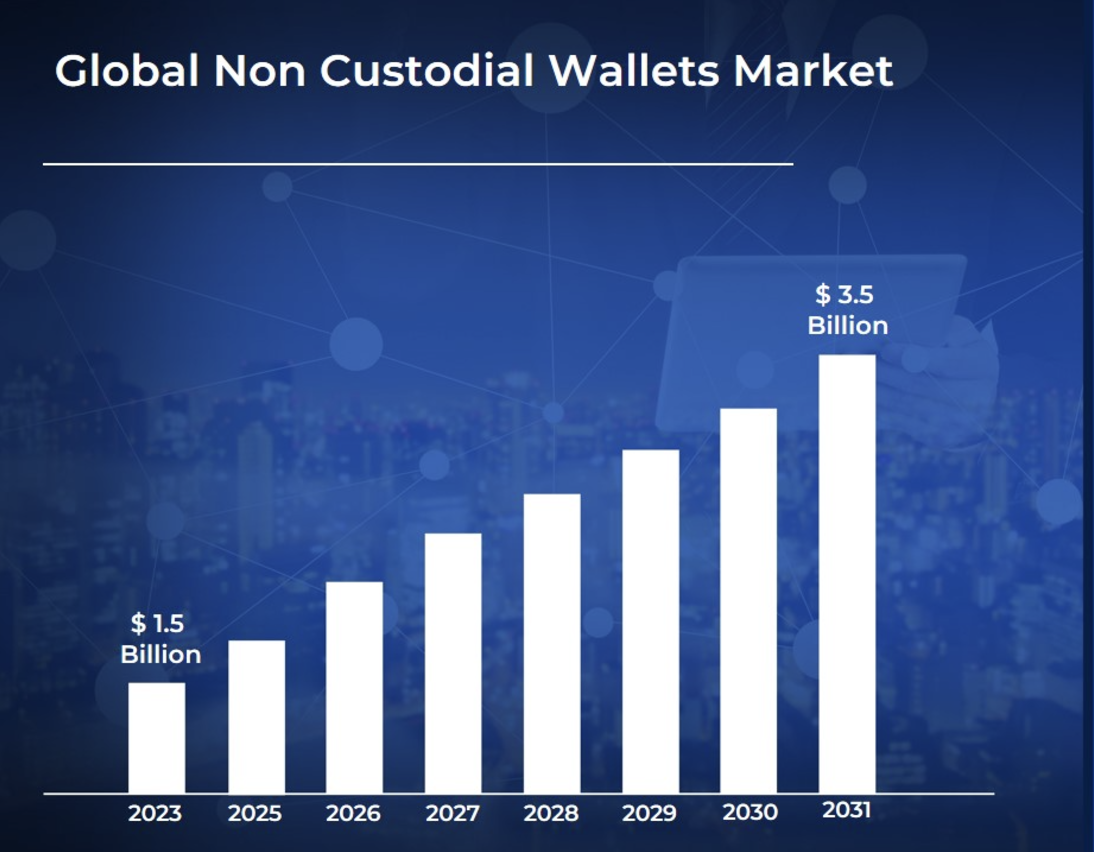
Market trends also point to growth. MetaMask, the leading self-storage wallet, saw a 55% increase in monthly active users within four months, from 19 million in September to 30 million in January. The market for self-storage wallets is estimated to reach 3 .5 billion USD by 2031, growing at a compound annual growth rate of 8% from 2024 to 2031.
However, regulatory challenges persist. Governments will continue to promote surveillance, and the crypto community needs to adapt. Hybrid models that combine freedom and compliance may provide a way forward.
The importance of self-governing wallets is clear. They protect user sovereignty, promote innovation, and uphold the principles of decentralization. The task now is to ensure these values survive in a world increasingly driven by regulation.
Self-governance lies at the heart of cryptocurrency’s promise of decentralization and financial freedom. But it is under threat. Regulations like Brazil’s stablecoin restrictions show how governments are reshaping the industry.
The future of self-management lies in innovation and adaptability. With tools like SCA and gas fee deductions, these wallets are becoming more user-friendly and secure. The cryptocurrency community must continue to push for solutions that balance surveillance and the freedom users demand.
In this fight for control, self-storage wallets represent an important choice: Who will hold your crypto, an intermediary or you?
General Bitcoin News
[ad_2]