


Nvidia CEO Predicts China to Surpass US in AI Race
NewsNvidia’s Jensen Huang asserts China will lead the AI race due to U.S. export limits and China’s energy subsidies.
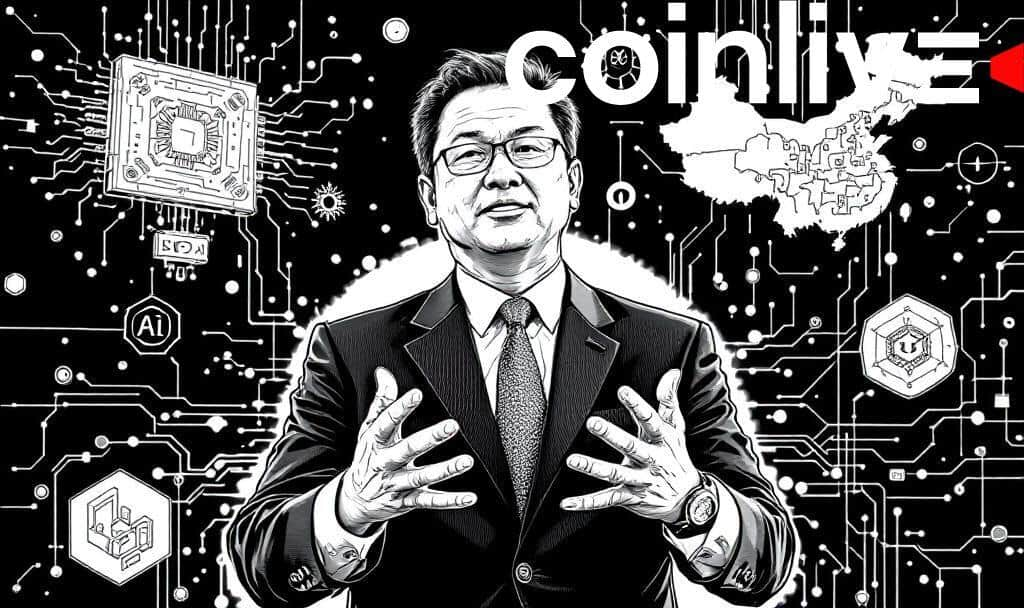
- Nvidia leader claims China will lead AI race due to US export controls.
- US policies and China’s resources impact global AI positions.
- Nvidia faces market changes amid geopolitical tech competition.

Nvidia’s CEO Jensen Huang claims China will surpass the US in the AI race due to US export controls and China’s subsidized energy, as reported in the Financial Times.
Huang’s statement highlights geopolitical tensions impacting AI development, with potential shifts in global tech dominance and investment implications for US and Chinese markets.
In a recent interview, Nvidia CEO Jensen Huang expressed, “China is going to win the AI race,” a statement emphasizing the impact of U.S. export controls and China’s ability to provide subsidized energy crucial for data centers.
Jensen Huang, who co-founded Nvidia, has repeatedly criticized U.S. export restrictions, underscoring their adverse effects on American tech leadership. He reiterated that China, described as “nanoseconds behind,” will gain an advantage in the AI sector due to these policies.
The immediate effects include a shift in market dynamics, with Nvidia losing ground due to export sanctions. China is poised to enhance its AI and semiconductor production, significantly impacting industry stakeholders and possibly leading to a realignment of market power.
Financially, Nvidia may witness a decline in revenue as China invests in domestic firms. This could steer billions from Western technology, compelling companies like Nvidia to reassess their strategies amid rising geopolitical tensions.
The geopolitical landscape is altering, with resource allocation redefining industry standards. Huang’s forecast signals the potential for escalated technological competition. This may necessitate regulatory adjustments and drive innovation within the global chip market.
Historical trends in tech independence could spur further investments in China’s semiconductor industry. Experts suggest a possible acceleration of global technological bifurcation, with implications for global collaboration and economic interdependence.
More From Crypto News

Aster (ASTER) Rises 4.88% in 24 Hours: What the Data Shows
Aster (ASTER) is trading at $0.655837, up 4.88% over the past 24 hours, according to CoinGecko data as of 19:13 UTC on November 11, 2026.

Bitcoin Misses Stock Rebound as ETF Outflows Hit Day Four
Bitcoin failed to follow a broad equity rebound on November 11, trading near $73,993 while Nasdaq-100 futures climbed 1.7% after CoreWeave posted an earnings be...

OCC Clears Coinbase National Trust Company for Crypto Custody
The OCC issued its decision in CD-1370 , formally authorizing Coinbase National Trust Company to operate as a federally chartered trust bank focused on digital-...

Reported Ankr Ethereum Bridge Drain Exceeds $303,000, The Defiant Says
The Ankr Ethereum Bridge was drained of more than $303,000 in an exploit carried out across five transactions.

Binance CFO Steps Down After Reported Hack, Co-CEO Cites Planned Transition
Binance’s chief financial officer has stepped down, the exchange confirmed, with the departure landing nine days after the platform suffered what has been descr...

US Treasury Takes Action Against MEXC Over Alleged $16B in Sanctions-Linked Transactions
The Treasury press release identifies MEXC as the subject of the action and ties the exchange to transaction flows connected to three sanctioned or adversarial...
