


Trump Signs Executive Order Ending Banking Discrimination
NewsTrump’s executive order addresses banking discrimination against crypto businesses and mandates a review of past practices by regulators.
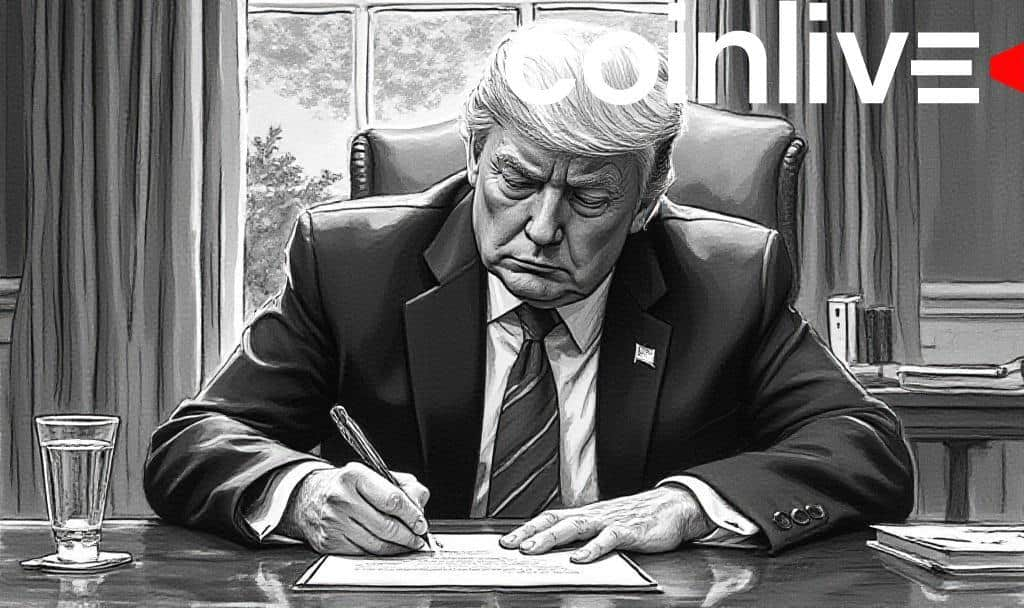
- Trump signs executive order addressing banking discrimination against crypto sectors.
- Regulators review past practices impacting diverse business activities.
- Potential impacts on crypto exchanges, stablecoins, and banking policies.

On August 7, 2025, President Donald Trump signed an executive order to combat ‘debanking’ by federal regulators against lawful businesses, including crypto, in the United States.

This order prompts a regulatory overhaul, potentially reshaping banking relationships for the cryptocurrency industry, especially those linked to US-based crypto enterprises.
President Donald Trump signed an executive order on August 7, 2025, targeting banking discrimination against crypto businesses. The directive mandates a review of past practices and requires action from federal regulators within 120 days.
The executive order involves Donald J. Trump and Congressman Andy Barr, aiming to codify it in Congress. Regulatory agencies will address banking denials based on political or lawful business activities. Key players include the OCC and FDIC.
The directive’s immediate effects are being examined by various industries, with a significant focus on the cryptocurrency sector. Banks are reassessing their policies, which could affect their relationships with crypto firms, exchanges, and stablecoin issuers.
Financial impacts include potential fines and penalties for non-compliant banks. The order influences political and business decisions, highlighting a regulatory shift toward fair banking access for controversial or high-risk sectors.
Potential outcomes include a significant change in how banks engage with crypto entities. The executive order draws parallels with past actions like “Operation Choke Point,” which affected similar sectors.
Historical trends show the order could reshape regulatory practices, influencing future tech and financial services. Banks might prioritize transparent engagement with crypto businesses, aligning with state-led fair banking access laws in Tennessee and Florida.
“The Executive Order… improves the supervisory process by stopping unelected regulators from using ‘reputational risk’ as a component of financial supervision and as a tool to target those who don’t align with their political agenda.” — Donald J. Trump, President of the United States
More From Crypto News

Aster (ASTER) Rises 4.88% in 24 Hours: What the Data Shows
Aster (ASTER) is trading at $0.655837, up 4.88% over the past 24 hours, according to CoinGecko data as of 19:13 UTC on November 11, 2026.

Bitcoin Misses Stock Rebound as ETF Outflows Hit Day Four
Bitcoin failed to follow a broad equity rebound on November 11, trading near $73,993 while Nasdaq-100 futures climbed 1.7% after CoreWeave posted an earnings be...

OCC Clears Coinbase National Trust Company for Crypto Custody
The OCC issued its decision in CD-1370 , formally authorizing Coinbase National Trust Company to operate as a federally chartered trust bank focused on digital-...

Reported Ankr Ethereum Bridge Drain Exceeds $303,000, The Defiant Says
The Ankr Ethereum Bridge was drained of more than $303,000 in an exploit carried out across five transactions.

Binance CFO Steps Down After Reported Hack, Co-CEO Cites Planned Transition
Binance’s chief financial officer has stepped down, the exchange confirmed, with the departure landing nine days after the platform suffered what has been descr...

US Treasury Takes Action Against MEXC Over Alleged $16B in Sanctions-Linked Transactions
The Treasury press release identifies MEXC as the subject of the action and ties the exchange to transaction flows connected to three sanctioned or adversarial...
