


U.S. Says It Seized $1 Billion in Iranian Crypto: What Happened
The U.S. says it seized $1 billion in Iranian crypto. Here’s what happened, which assets may be involved, and why the case matters for crypto markets.
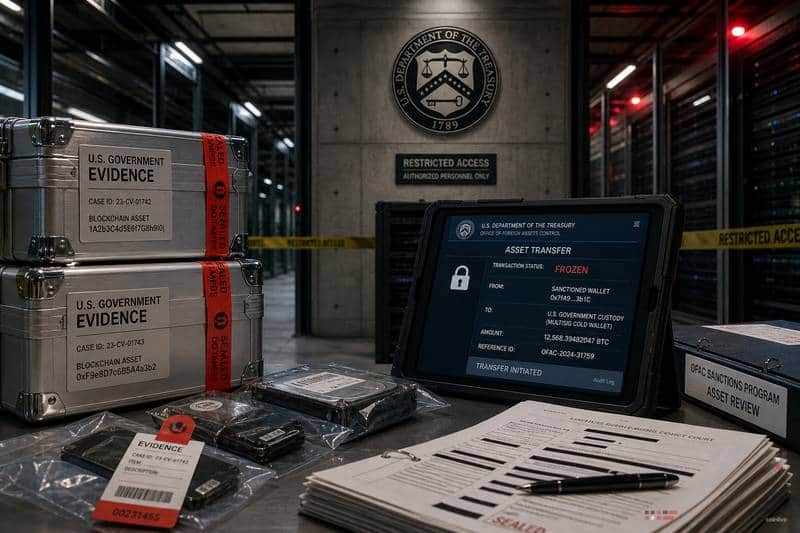
The United States government says it has seized roughly $1 billion in cryptocurrency linked to Iran, marking one of the largest crypto-related enforcement actions tied to sanctions evasion.
TLDR Keypoints
- The U.S. says it seized approximately $1 billion in crypto assets linked to Iran, according to Treasury Secretary Scott Bessent.
- The seized assets are described as Iranian cryptocurrency used to circumvent U.S. sanctions.
- The action signals an escalation in crypto enforcement, with implications for exchanges, compliance teams, and sanctions monitoring across the industry.
What the U.S. seizure claim says happened
Treasury Secretary Scott Bessent announced the seizure, describing it as part of a broader pressure campaign against Iran’s financial networks. The claim was reported by Fox Business, which noted the action signals an escalation in how Washington targets crypto assets connected to sanctioned regimes.
The U.S. Treasury Department has issued related press releases outlining enforcement measures against Iranian-linked financial activity. The seized assets are described as cryptocurrency used by Iranian actors to circumvent U.S. sanctions.
CoinDesk reported that the seizure is part of an expanding pressure campaign, suggesting the action goes beyond a single enforcement event.
Why the case matters for crypto enforcement and markets
A seizure of this scale tied to a sanctioned nation raises immediate questions for exchanges, wallet providers, and compliance teams. Platforms handling large volumes will face renewed scrutiny over whether their screening tools can identify assets linked to sanctioned jurisdictions.
The case also intersects with ongoing debates about how effectively Treasury’s sanctions framework applies to decentralized and pseudonymous crypto networks. As U.S. fiscal pressures continue to mount, government interest in seizing and potentially liquidating digital assets adds another layer to the relationship between crypto and federal policy.
On-chain investigators and blockchain analytics firms are likely to examine the wallets and transaction trails involved. The size of the seizure suggests a prolonged investigation rather than a single opportunistic freeze, though the specific assets, chains, or custodial arrangements have not been fully disclosed.
For traders watching how political actors are increasingly engaging with Bitcoin and crypto, the enforcement action reinforces that digital assets sit squarely within Washington’s financial policy toolkit.
What remains unclear after the announcement
Several key details are missing from the public record. It is not clear whether the seized crypto was already in U.S. government custody through prior enforcement actions or whether it was newly identified and frozen.
The specific cryptocurrencies involved have not been publicly confirmed. Questions about wallet ownership, the timeline of the investigation, and whether any exchanges or intermediaries cooperated remain unanswered.
The $1 billion figure comes from U.S. government statements. Independent blockchain analysts have not yet publicly confirmed the on-chain details, and no transaction hashes or wallet addresses have been released for public verification. As Bitcoin’s foundational design principles emphasize transparency and verifiability, the absence of on-chain proof leaves a gap between the official claim and what the crypto community can independently confirm.
Disclaimer: This article is for informational purposes only and does not constitute financial or investment advice. Cryptocurrency and digital asset markets carry significant risk. Always do your own research before making decisions.
More From Crypto News

South Korea Blocks 27 Unregistered Crypto Exchanges, Including KuCoin
South Korean authorities have blocked domestic access to 27 unregistered cryptocurrency exchange websites, with KuCoin and MEXC among the platforms specifically...

UK Judge Applies Chinese Law in £4B Bitcoin Fraud Claims
A UK judge has ruled that Chinese law governs the legal claims connected to an alleged £4 billion Bitcoin fraud, a significant procedural decision that determin...

New ENS Proposal Would Make .eth Migration to ENSv2 Irreversible
ENS founder Nick Johnson posted an executable governance draft titled “Activate ENSv2” on October 11, 2026, proposing to bring ENSv2 online on Ethereum mainnet,...

Blur to Shut Down Frontend as On-Chain Protocol Continues
A frontend is the web interface users interact with to browse, list, and trade NFTs. Shutting it down removes that access layer without touching the smart contr...

ASIC Proposes Crypto-Settled CFD Protections in Australia
Australia’s financial regulator is proposing to extend its existing retail CFD protections to cover derivatives settled through digital assets, closing a regula...

UK Court Applies Chinese Law to 61,000 Seized Bitcoin Ownership Claims
The ruling does not determine who ultimately owns the bitcoin. It establishes which legal framework the court will apply when assessing those competing claims,...

Author
Akita Inu
Akita Inu covers fast-moving crypto market updates, exchange news, and token ecosystem developments for CoinLive, with a focus on concise source-led reporting.