


Why did Ethereum transaction charges drop by 90%?
According to figures provided by The Block, the average transaction fee on the Ethereum network is now around $4.50 compared to nearly $45 a month ago – a 90% d...
[ad_1]

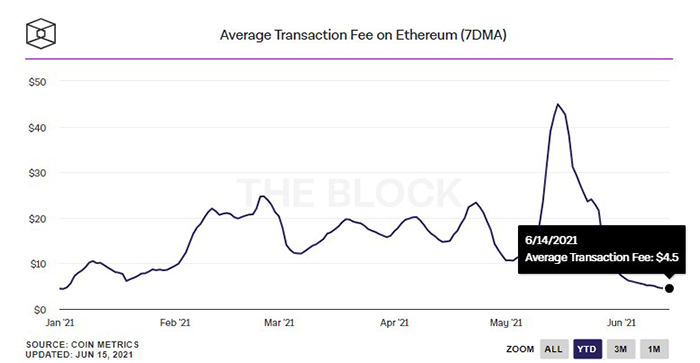
According to figures provided by The Block, the average transaction fee on the Ethereum network is now around $4.50 compared to nearly $45 a month ago – a 90% drop.
Average transaction fees are currently at a six-month low, according to The Block. (The data is a 7-day moving average (7MDA), which means it is the average of the past seven days and indicates the short-term trend.)
So why have gas fees dropped from record highs just a month ago? There are several factors contributing to this remarkable decline as follows.
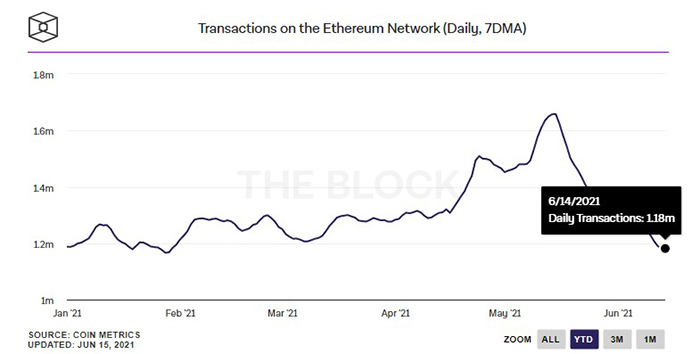
First, there has been a significant drop in Ethereum transactions in recent weeks. Both Decentralized Finance (DeFi) and NFT transactions fell due to the negative impact of price movements in May.
For example, the number of daily transactions on Ethereum has dropped to about 1.2 million from 1.65 million a month ago. The volume and number of NFT transactions have also plummeted.
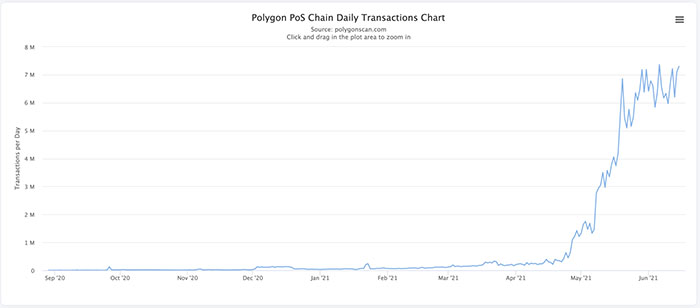
Another factor contributing to lower gas fees is the increasing use of Polygon (formerly Matic Network) Layer 2 scaling solutions. The number of transactions on the Polygon network has increased significantly in recent weeks.
From about 1.5 million, the number of daily transactions on Polygon is now close to 7.5 million, according to PolygonScan. That is more than five times the number of daily Ethereum transactions.
Polygon is a Proof of Stake (PoS) blockchain compared to Ethereum, which is currently a Proof of Work (PoW) blockchain, although it is hatching plans to switch to a PoS model in the future. The transaction processing capacity of the PoW model is limited, so it will generally have a higher cost, although both models have their own pros and cons.
However, one thing is for sure: the need for scaling solutions is growing. Polygon remains one of such popular solutions. According to a report by The Block Research, there are more than 350 DeFi projects in the Polygon ecosystem alone.
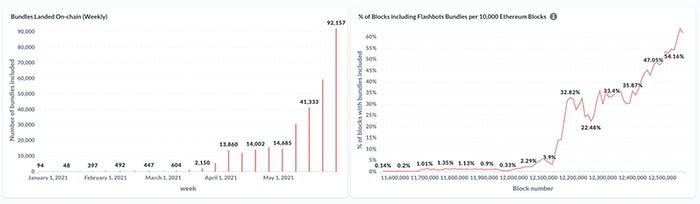
Finally, the increasing use of flashbot transactions is another factor that has contributed to the reduction in gas fees. Flashbots allow traders to communicate with Ethereum miners off-chain, as in a private channel, to execute transactions. This reduces the number of spam transactions on the chain and thus reduces gas fees. In other words, reduce the number of bots trying to set the highest gas price to get priority trading.
Maybe you are interested:
Join our channel to update the most useful news and knowledge at:
According to Coinlive
Compiled by ToiYeuBitcoin
[ad_2]
More From Crypto News

Ledger Investigates Reported $86M Crypto Drain
Ledger is reportedly investigating a crypto drain estimated at $86 million, with reseller supply-chain concerns emerging as a central question in the case. The...

NEAR Rises 10% as Bitcoin Rebounds Toward $83K
NEAR Protocol surged more than 10% on October 10, 2026, hitting $5. 25 and posting the strongest daily gain among larger-cap altcoins, as Bitcoin shook off a mu...

Ethereum ETF Approval Prediction Market: Can It Drive Demand This Week?
A new weekly prediction market on CryptoSlate is tracking where Ethereum closes by October 11, 2026, with the sub-$2,400 outcome currently leading at 15. 5%.

THORChain TRON USDT Swaps Resume After $1.45M Freeze
THORChain has resumed TRON USDT swap functionality after $1. 45 million in USDT was frozen across four protocol vaults, restoring access for traders routing sta...

Ethereum Fee Burns Offset 2.07% of Gross Issuance Through Oct. 9
Gross issuance refers to all new ETH minted as validator rewards before any fee destruction is applied. Fee burns, introduced by EIP-1559, permanently remove th...

UK Sanctions Three Crypto Firms Over Russia Ties
The United Kingdom has sanctioned three cryptocurrency firms over alleged ties to Russia, marking the latest use of financial enforcement tools to target digita...
