- Tether launches USAT to compete with Circle’s USDC.
- USAT aims for U.S. regulation and market share.
- Shifts in liquidity and compliance could occur.
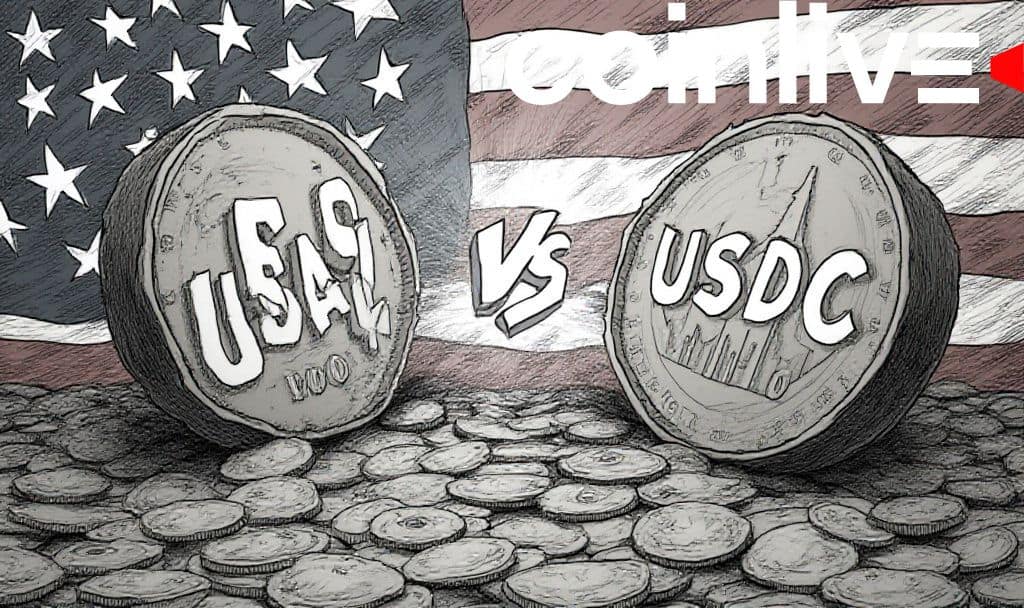
Tether has launched USAT, a U.S.-regulated stablecoin, to challenge Circle’s USDC in the growing $650 billion U.S. institutional stablecoin market.
This move could shift institutional trust, highlight new compliance standards, and influence trends in the stablecoin arena.
Main Content
Tether’s launch of USAT, a U.S.-regulated stablecoin, presents a direct competition against Circle’s USDC. The $650 billion U.S. stablecoin market is at stake as compliance and trust dynamics shift.
Tether’s CEO Paolo Ardoino and Bo Hines, newly appointed CEO of Tether’s U.S. subsidiary, are leading the charge. USAT aims to incorporate daily reserve attestations and use Anchorage Digital Bank and Cantor Fitzgerald for security.
“Tether invented the stablecoin. Now we’re bringing it home 🇺🇸”
The launch affects both local and institutional markets. USDT’s market share is already diminished, dropping to 58% in response to regulatory and product innovations. Key market players include Bank of America, Ripple, and Hyperliquid.


Tether reported $13 billion in gross profits for 2024, dwarfing Circle’s earnings. The GENIUS Act mandates fully reserved, U.S.-regulated stablecoin issuance, making regulatory compliance a critical factor in future market decisions.
Circle’s transparency and treasury-backed model continue to appeal to compliance-focused investors. However, Tether’s onshore pivot offers new agility in a competitive space. Institutional choices reflect risk related to reserve models and regulatory outcomes.
Future impacts include liquidity shifts and potential changes in institutional risk frameworks. Other stablecoins, governance tokens, and DeFi platforms will be observers, indicating shifts might influence regulatory recalibrations in reserve-disclosure standards.