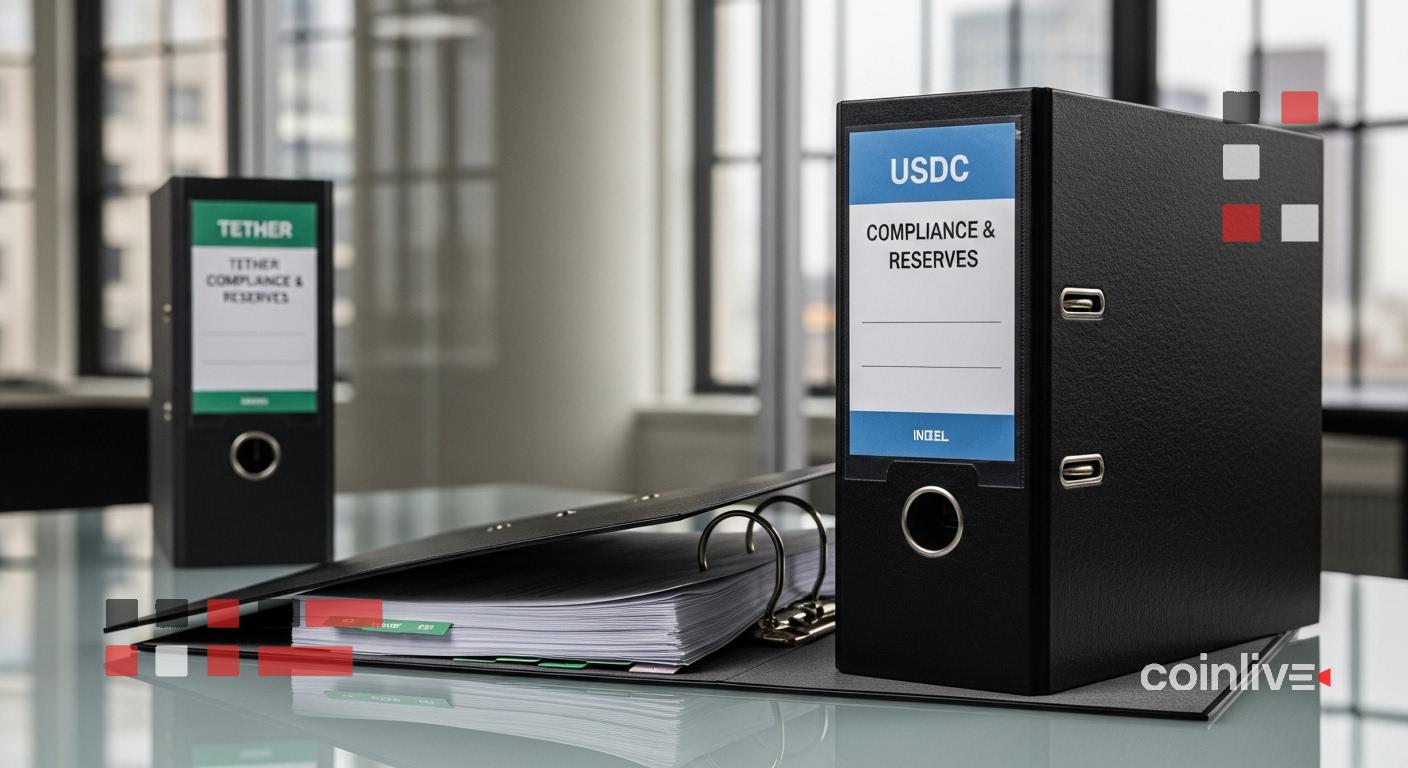
Circle’s growth narrows Tether’s lead due to regulation and yield
The digital dollar power balance is shifting as Circle’s rapid growth closes in on Tether’s long-running dominance. The drivers are largely structural: clearer regulatory alignment and the economics of reserve yield are reshaping which stablecoins institutions and platforms are willing to hold and route through.
According to Blockhead.co, regulatory reforms and the prospect of bank or consortium-issued stablecoins are beginning to crack the USDT–USDC duopoly, tilting advantage toward issuers that lean into licensing and disclosures. That backdrop positions Circle’s model to resonate more in jurisdictions prioritizing compliance and supervised reserve management.
Based on analysis published by PANewsLab of $94.2 billion in stablecoin payments data, better cross-chain channels and incentive design can erode even entrenched market leads. The figures indicate that as payment rails improve, liquidity can migrate to assets and issuers that integrate more deeply with compliance-aware infrastructure.
Why this stablecoin shift matters now for users and markets
A central near-term issue is yield. Fiat-backed stablecoins typically invest reserves in cash and short-duration U.S. Treasuries, with the income accruing to the issuer rather than the holder. “Holders of USDT/USDC are not sharing in the yield generated by reserves while issuers are capturing those profits,” said Dan Reecer, co-founder of Wormhole.
As reported by CoinDesk, USDT and USDC still command over 80% market share, yet pressure is building from yield-bearing stablecoins such as USDe and Paxos’s USDG, alongside new rails that share yield with applications. The report notes exchanges have become a key battleground where pairings and integrations can rapidly shift which unit of account is most liquid.
A CEPR working paper emphasizes that Tether’s fragility stems from limited balance-sheet transparency and non-U.S. incorporation, whereas Circle’s more regulated structure is viewed as comparatively safer in tighter regulatory environments. The contrast matters for institutional risk committees weighing counterparty exposure and redemption mechanics.
For users, these dynamics influence perceived stability, on/off-ramps, and the likelihood of smooth redemptions under stress. For markets, compliance posture and cross-chain connectivity can redirect settlement flows, while yield-bearing designs, unlike fully reserved fiat-backed coins, may embed additional model and market risks that each venue must assess.


USDC vs USDT: transparency, reserves, and compliance compared
USDC and USDT are fiat-backed stablecoins designed to track the U.S. dollar, with reserves typically consisting of cash and short-duration instruments such as u.S. Treasuries. In prevailing models, reserve income accrues to the issuer rather than being distributed to holders, which has intensified scrutiny of who captures the benefit of higher rates.
Transparency and compliance positioning differ in emphasis. USDC markets a cadence of disclosures and U.S.-aligned compliance practices, while USDT has faced recurring questions about reserve transparency and offshore structure; these perceptions shape which coins are acceptable inside regulated financial stacks and payment programs.
In practical terms, institutions tend to evaluate attestation frequency, custody arrangements, and jurisdictional oversight alongside technical factors like chain support and integration depth. For end users and venues, the result shows up in exchange pairings, cross-border routing choices, and how quickly liquidity can move when policy or market conditions change.
| Disclaimer: The information provided in this article is for informational purposes only and does not constitute financial, investment, legal, or trading advice. Cryptocurrency markets are highly volatile and involve risk. Readers should conduct their own research and consult with a qualified professional before making any investment decisions. The publisher is not responsible for any losses incurred as a result of reliance on the information contained herein. |