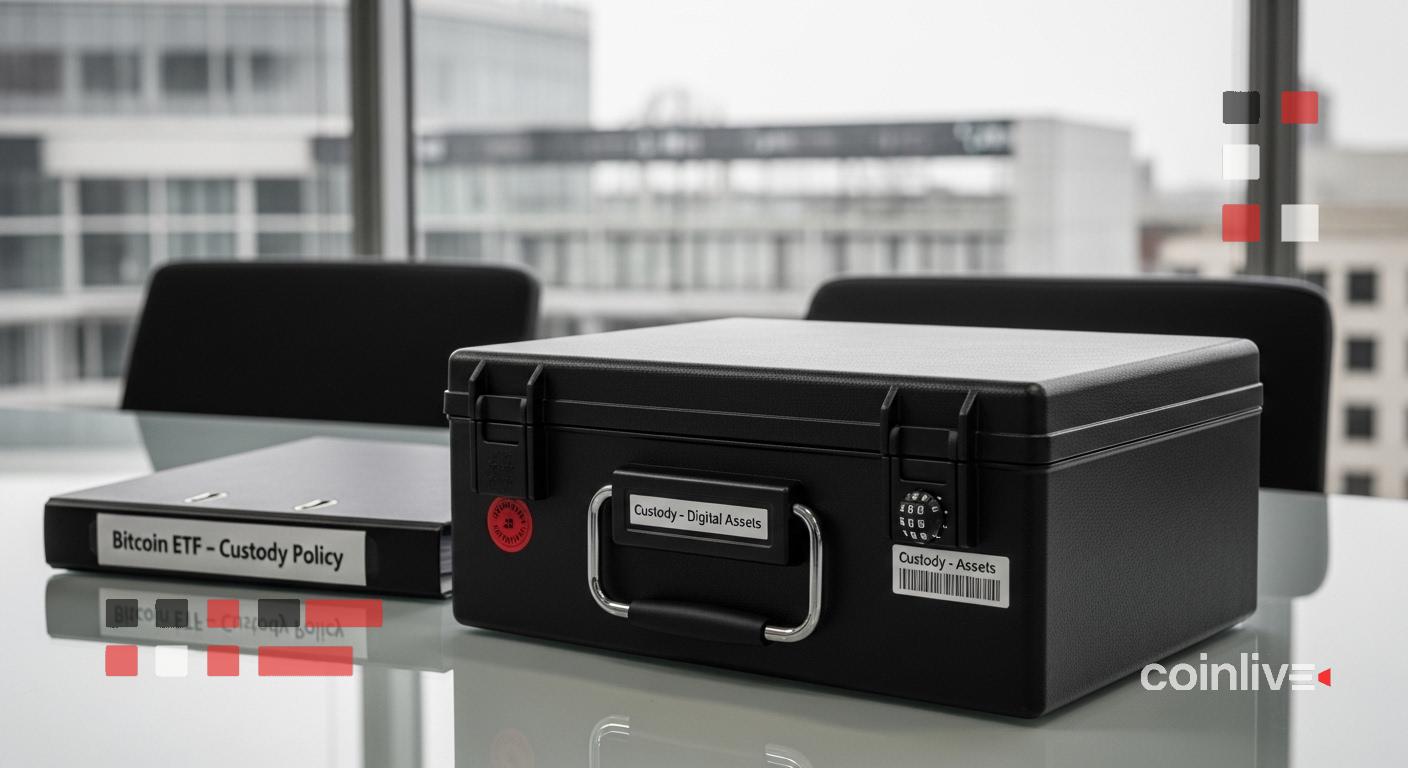
Answer: BlackRock’s IBIT holds most Bitcoin; Strategy second; Coinbase custodian
Among identifiable, regulated vehicles and corporate treasuries, BlackRock’s iShares Bitcoin Trust (IBIT) currently holds the most Bitcoin, with Strategy (formerly MicroStrategy) in second place. Coinbase’s primary role in this comparison is as a third‑party custodian; it safeguards assets for ETFs and institutions but is not the beneficial owner of those coins.
As of July 8, 2025, IBIT held nearly 700,000 BTC, surpassing Strategy’s roughly 597,325 BTC, as reported by Benzinga (citing Bitcoin Treasuries). These figures move with creations, redemptions, and treasury actions, and in the ETF model the beneficial owners are fund shareholders, not the issuer or the custodian.
Ownership vs custody: ETF AUM, corporate treasury, and why it matters
ETF assets under management reflect investor-owned Bitcoin held for the benefit of fund shareholders, while a corporate treasury like Strategy’s records Bitcoin on the company’s balance sheet. Custody describes who controls the private keys and safekeeps the asset; custodians do not acquire economic ownership from that role.
From a macro perspective, some large asset managers have framed Bitcoin as a portfolio hedge during periods of stress in fiat systems before clarifying how exposure is structured. “Crypto and gold are assets of fear,” said Larry Fink, CEO of BlackRock, discussing investor behavior amid concerns about debt and currency debasement, as reported by Yahoo Finance.
This distinction matters for risk and market structure. Concentration at large custodians centralizes key management and operational risk, while ETF wrappers concentrate flows at a few issuers; corporate balance‑sheet ownership concentrates economic exposure in a single company. Regulatory oversight, segregation of assets, and qualified custodian arrangements can mitigate, but not eliminate, counterparty and operational risks.
Current standings: IBIT vs Strategy holdings, and Coinbase’s custodial role
The standings, IBIT ahead of Strategy, reflect persistent ETF inflows versus an already large, but finite, corporate treasury base. Earlier in the cycle, IBIT’s growth trajectory was documented as accelerating, with sizable Bitcoin under management by mid‑2025; the gap emerged as ETF creations outpaced corporate purchases.


Coinbase’s institutional footprint underscores why it is often mentioned in this debate. Coinbase custodies approximately 81% of crypto assets held in U.S. ETFs, according to coinlaw.io, positioning it as the dominant safekeeper rather than the largest economic owner.
Address‑label analyses have also fueled confusion about “who holds the most.” Based on reporting by Cointelegraph, Arkham Intelligence estimated in 2023 that Coinbase‑labeled addresses held roughly 947,755 BTC; however, most of that total belongs to clients, not Coinbase’s balance sheet, an important distinction between custody and ownership.
For market context at the time of this writing, the data show Bitcoin trading near $67,272, while Strategy Inc. (MSTR) recently closed around $131 on a NasdaqGS delayed quote. Price levels are illustrative, change frequently, and do not alter the core distinction: IBIT leads on investor‑owned ETF Bitcoin, Strategy leads among corporate treasuries, and Coinbase serves chiefly as custodian.
| Disclaimer: The information provided in this article is for informational purposes only and does not constitute financial, investment, legal, or trading advice. Cryptocurrency markets are highly volatile and involve risk. Readers should conduct their own research and consult with a qualified professional before making any investment decisions. The publisher is not responsible for any losses incurred as a result of reliance on the information contained herein. |