- Main event, leadership changes, market impact, financial shifts, or expert insights.
- Trump targets 2026 for crypto integration.
- US focus on stablecoins with GENIUS Act.
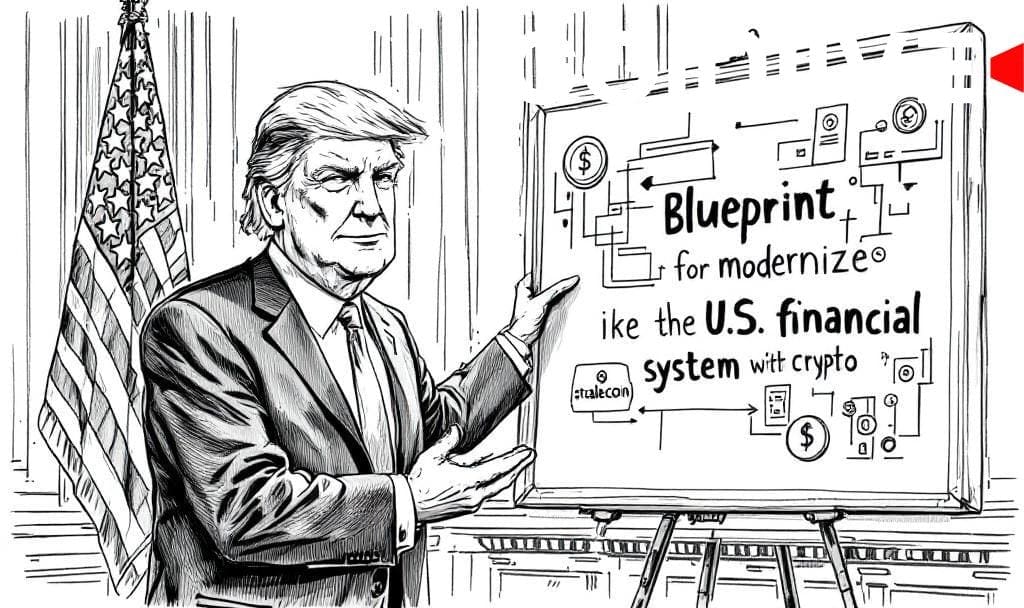
Donald Trump announced an initiative to modernize the U.S. financial system with state-backed crypto technology during his presidency, advancing plans through regulatory frameworks and strategic digital reserves.
The initiative’s progress indicates potential sector transformation, though full implementation extends beyond 2026, delaying immediate impact on traditional systems and market dynamics.
Main Content
Donald Trump’s initiative to modernize the US financial system with a crypto upgrade is in progress. A full-scale transformation is expected post-2026 as the administration lays critical groundwork. Trump’s executive order establishes guidelines for digital asset regulations, setting the stage for this transformation.


This initiative, led by Trump as the President, includes the creation of federal frameworks for stablecoins and a planned U.S. Crypto Reserve with major cryptocurrencies like BTC, ETH, and ADA. President Trump establishes the Strategic Bitcoin Reserve to further cement this framework.
“The United States will lead the world in blockchain and digital assets, unleashing American innovation without creating a government surveillance coin.” – Donald J. Trump, President, United States, Truth Social, March 2025
The initiative’s focus on stablecoins aims to gradually integrate digital assets within the financial system. However, the legacy system will continue to operate in parallel, impacting banks and payment systems significantly. These changes are expected to politically and financially reshape the system, as the administration pushes for crypto-inclusive regulation to spur institutional involvement in digital assets.
Federal agencies are involved in setting regulations, while the GENIUS Act outlines stablecoin standards. Future implications include increased institutional use and compliance-based liquidity expansion. Regulatory advancements could lead to broader adoption of digital assets, influencing market dynamics and technological infrastructure as these reforms unfold. Historical trends indicate a substantial shift toward integrating crypto in existing systems.
Recommendations from President’s Working Group on Digital Assets provide a blueprint on how to strengthen American leadership in digital financial technology.