


Aster DEX Review 2026: Perp Trading, asBNB Yield, and the 1001x Leverage Question
Aster combines perpetual futures up to 1001x leverage, spot trading, and yield products like asBNB and USDF across multiple chains. Read the honest review, incl...

Aster DEX Review 2026: Can a Perp DEX Be Both Extreme and Trustworthy?
Who this guide is for: Crypto traders who want on-chain perpetual futures without a centralized custodian, and DeFi yield seekers looking at asBNB or USDF as collateral alternatives.
We tested Aster on three devices: Windows PC (Chrome 128), Samsung Galaxy Tab S9 (Chrome Android), and iPhone 15 (Safari). Desktop offers the complete order-book trading interface; mobile provides a simplified trading panel with position management.
Important upfront: This review includes a section on Aster's removal and reinstatement from DefiLlama regarding suspected volume inflation. Read the Security and Controversies section before depositing significant capital.
What Is Aster? (Plain English)
Aster is a decentralized exchange built primarily for perpetual futures, the "bet on price direction with leverage" instruments that dominate crypto derivatives markets. Unlike spot trading, perps have no expiry date and let traders go long or short with borrowed capital.
Aster emerged from the merger of two earlier DeFi projects: Astherus (a yield optimization protocol on BNB Chain) and APX Finance (a perpetual DEX). Combining them created a protocol with both a high-performance trading layer and native yield products.
The headline numbers sound remarkable: $3.8 trillion in cumulative trading volume, 7.9 million registered traders, $1.2 billion in assets secured in on-chain smart contracts. The platform is backed by the Binance ecosystem, runs across Ethereum, Arbitrum, Solana, and BNB Chain, and offers leverage up to 1001x, a number designed to attract attention.
What Aster adds on top of the standard perp DEX model is a suite of yield products: asBNB (a liquid-staked BNB derivative that earns staking yield) and USDF (a collateralized stablecoin with delta-neutral yield built in). These can be used as trading collateral, meaning your margin earns yield even when your position is not open.
How Aster Looks on Your Device
Desktop (1440px)
Aster's desktop interface is deliberately modeled on centralized exchange layouts, order book on the right, price chart center, position panel below. If you have used Binance Futures or OKX, the layout will feel immediately familiar. The three trading modes (Pro, Shield, 1001x) switch via tabs above the chart. The Earn section is a separate dashboard page, cleanly separated from the trading interface.
Tablet (Galaxy Tab S9, 800px)
Tablet landscape mode renders the full desktop layout. In portrait mode, the order book collapses to a summary strip and the position panel scrolls beneath the chart. Functional, though the font sizes shrink more than comfortable for reading liquidation prices, pinch to zoom frequently.
Mobile (iPhone 15, 390px)
Aster's mobile view presents a single trading column: asset selector, leverage slider, buy/sell buttons, and active positions. The full order book is not visible, replaced by a simplified bid/ask spread indicator. For monitoring and closing positions, mobile works well. For precise order entry on small price moves, desktop is preferable.
Connecting Your Wallet (Live Screenshot)
We opened Aster DEX on 29 October 2026 and clicked "Connect Wallet" to test the connection flow live.
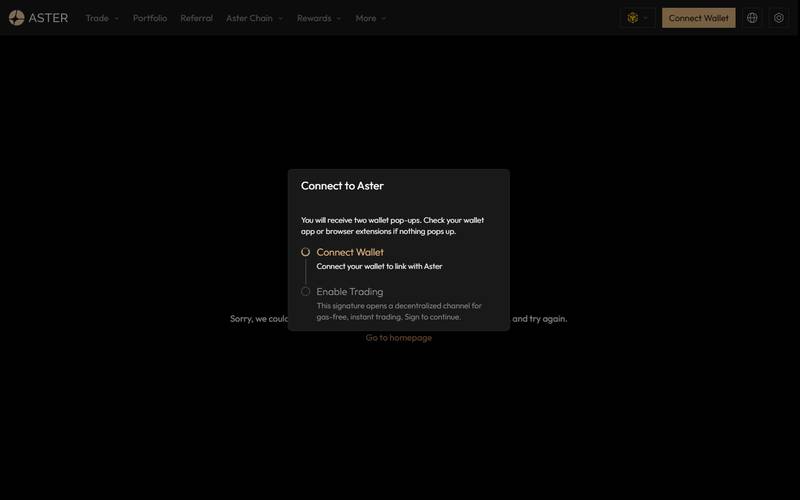
the Aster perp trading interface requiring wallet to place trades and view positions.
How to connect:
- Go to https://www.asterdex.com/en/trade/BTC-USDT
- Click "Connect Wallet" (or "Connect" / "Sign In" depending on the site)
- Select MetaMask from the wallet picker
- In the MetaMask popup, click "Connect"
- Sign the message if prompted (confirms wallet ownership: no transaction authorised)
Once connected, the top-right corner shows your shortened wallet address and your balances appear in the interface.
Core Features
Perpetual Futures (Pro Mode)
The standard leveraged trading interface. Open long or short positions on BTC, ETH, SOL, BNB, and dozens of other assets with up to 100x leverage in Pro mode. Supports limit orders, stop-loss/take-profit settings, and cross or isolated margin modes. The on-chain order book matches by time-price priority with smart contract settlement.
Shield Mode (Privacy Trading)
Aster's differentiating feature versus most perp DEXes. In Shield Mode, your trade size and direction are obscured on-chain, counterparties and observers cannot identify your position before execution. Aimed at traders who want to avoid front-running or prefer not to broadcast large directional bets publicly. Shield Mode uses a commitment scheme to hide order details until settlement.
1001x Mode (Simple / Extreme Leverage)
A simplified one-click interface offering leverage up to 1001x. Designed for retail traders who want maximum leverage without configuring margin parameters. At 1001x, a 0.1% move against your position triggers liquidation, this is a feature for very experienced or very speculative traders, not a beginner tool. The extreme leverage figure is primarily a marketing differentiator.
Spot Trading
Aster runs a CEX-style limit order book for spot assets. Over 35 trading pairs are listed including BTC, ETH, BNB, ASTER, and several altcoins. Tokenized US stocks (TSLA, AAPL, NVDA derivatives) and tokenized precious metals (Gold, Silver) are also available, expanding Aster's addressable market beyond pure crypto.
Aster Earn: asBNB
asBNB is Aster's liquid-staked BNB token. Deposit BNB to receive asBNB, which automatically compounds native BNB Chain staking rewards while remaining liquid. asBNB can be:
- Held for yield (~4-5% APY from BNB validator rewards)
- Used as trading collateral in Aster Pro (reducing the opportunity cost of margin)
- Bridged across supported chains
This mirrors Lido's stETH on Ethereum or Kinetiq's KNTQ on Hyperliquid, liquid staking derivatives that make your collateral productive.
Aster Earn: USDF
USDF is Aster's yield-bearing stablecoin, convertible 1:1 with USDT. Behind the scenes, the protocol deploys USDF collateral into delta-neutral strategies (similar to Ethena's USDe model). USDF earns yield passively and carries a very high collateral factor within Aster's risk engine. It is designed to replace USDT as the primary trading collateral on the platform, routing yield back to users rather than to a centralized exchange.
How to Trade on Aster (Step by Step)
- Go to
aster.fiand click Launch App. - Connect your wallet, MetaMask, Binance Wallet, or any WalletConnect-compatible wallet. Email login is also available for users who prefer not to manage wallet keys directly.
- Fund your account: click Deposit in the trading panel, choose your asset (USDT, USDC, asBNB, or USDF), enter the amount, and confirm. Cross-chain deposits via bridge are supported.
- Select trading mode: Pro (standard leverage), Shield (private), or 1001x (extreme). Pro is recommended for most traders.
- Choose your market from the asset list (BTC-USDT, ETH-USDT, etc.).
- Set your trade: choose Long or Short, enter the position size, set your leverage multiplier using the slider, and optionally add Stop-Loss and Take-Profit prices.
- Review your liquidation price, Aster displays it clearly before you confirm. Ensure your liquidation price has sufficient buffer from current market price.
- Confirm the transaction in your wallet. Your position appears in the Positions panel at the bottom of the screen.
- To close: click the position in the Positions panel -> Close -> confirm.
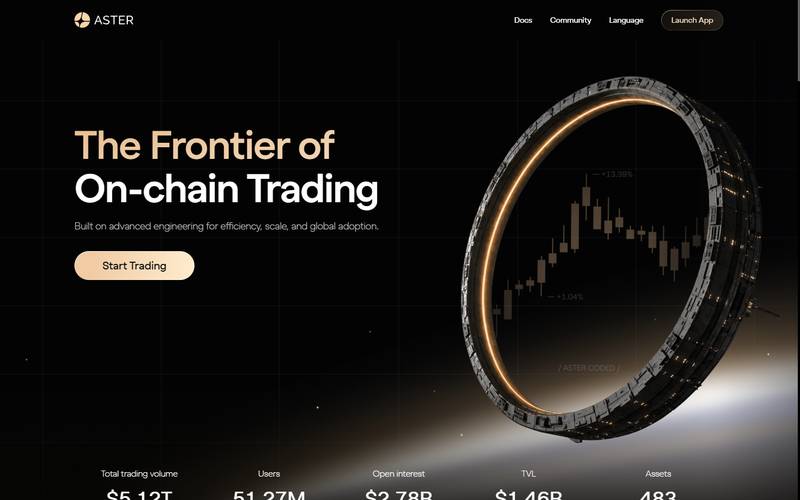
The Aster perpetuals market list, shows open interest, volume, and funding rate for each pair.
ASTER Tokenomics
| Metric | Value |
|---|---|
| Token | ASTER |
| Previous Token | APX (APX Finance) |
| Migration | APX -> ASTER (declining ratio, time-limited) |
| Launch date | September 17, 2025 |
| Token chain | BNB Chain (primary) |
| Max supply | 8,000,000,000 ASTER |
| Major allocation | Airdrop + ecosystem growth (majority) |
| Utilities | Governance (DAO), trading perks, staking rewards, ecosystem incentives |
| Hidden orders | Available to ASTER holders |
| Enhanced margin tools | Unlocked by ASTER holdings |
| Current program | Double Harvest, up to $10M USDF rewards over 5 weeks |
ASTER investment perspective: ASTER is a high-volatility governance and incentive token. The 8 billion maximum supply means significant dilution risk from ongoing emissions. The token's value depends on whether Aster DEX sustains organic trading activity, a question complicated by the volume controversy described below. ASTER is best treated as a speculative position tied directly to platform growth.
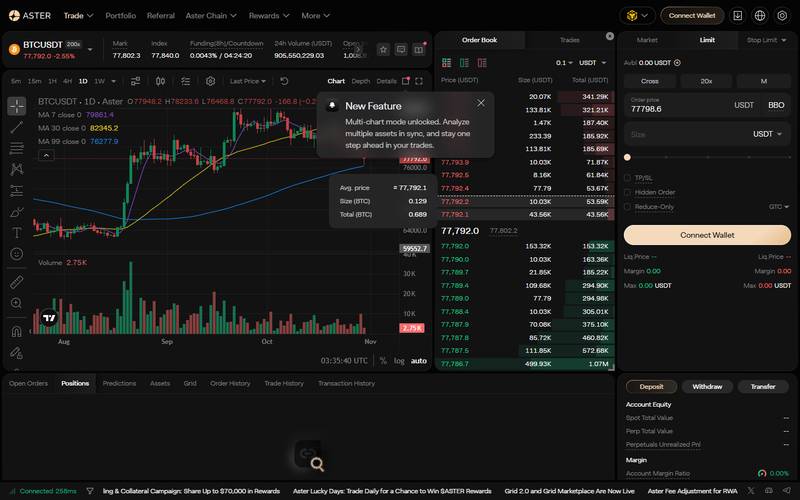
Select the trading pair and choose Long or Short, set leverage up to the maximum shown.
Security and Controversies
| Aspect | Details |
|---|---|
| Smart contract audits | Conducted (exact auditors not publicly listed prominently) |
| Custody model | Non-custodial; smart contract settlement |
| KYC requirement | Not required for on-chain trading |
| DefiLlama delisting | Yes, delisted for suspected volume inflation, later reinstated without historical data |
| User fund losses | No confirmed protocol hack or theft as of Oct 2026 |
| Deposit delay reports | Yes, user complaints on Reddit about delays under load |
The DefiLlama Volume Controversy
This is the most important thing to understand about Aster's metrics. Earlier in 2026, DefiLlama removed Aster from its protocol listings following investigations into suspected wash trading and artificial volume inflation. The platform was subsequently reinstated, but without its historical volume data, meaning the $3.8 trillion cumulative volume figure that Aster's own marketing cites cannot be fully verified against independent third-party records.
This does not prove fraud. Wash trading (a protocol trading with itself to inflate volume numbers) is a known practice in DeFi, and investigations are not convictions. However, it does mean you should treat Aster's headline volume numbers with skepticism and focus instead on observable on-chain metrics: current open interest, active positions, and withdrawal behavior.
User reports of delayed deposits have appeared on Reddit, particularly during high-traffic periods. Aster's team attributed these to bridge congestion and smart contract queue management, not protocol insolvency.
Our recommendation: test with a small amount first, verify withdrawals work cleanly, and size any position according to risk you are comfortable with, not marketing metrics.
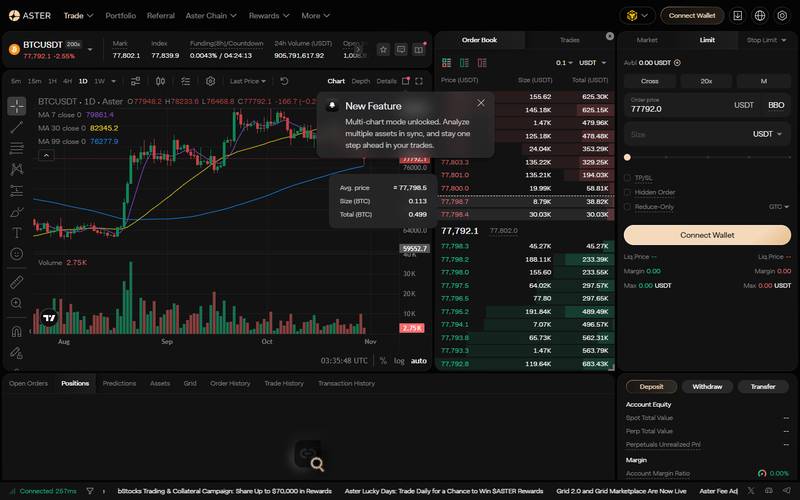
Enter your position size and choose Limit or Market order type.
Aster vs Competitors
| Feature | Aster | Hyperliquid | dYdX v4 | GMX v2 |
|---|---|---|---|---|
| Max leverage | 1001x | 50x | 20x | 50x |
| Privacy/Shield mode | Yes | No | No | No |
| Yield-bearing collateral | asBNB, USDF | Partial (HLP) | Partial (GLP) | |
| Tokenized stocks | Yes | |||
| Tokenized metals | Yes | |||
| Chains | ETH, ARB, SOL, BNB | Hyperliquid L1 | Cosmos appchain | Arbitrum, Avalanche |
| KYC required | No | No | No | No |
| Volume verification | DefiLlama incident | Clean | Clean | Clean |
| Binance ecosystem | Yes |
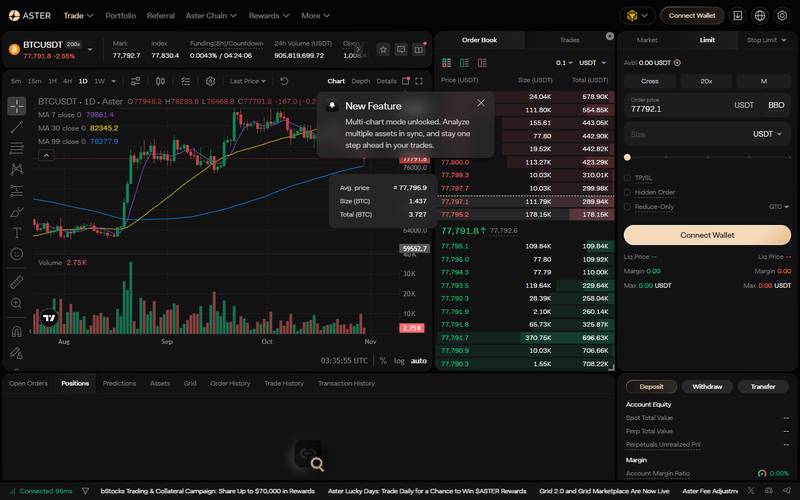
Review the order summary: margin required, liquidation price, and opening fee.
Pros and Cons
Pros
- CEX-style order book interface familiar to any Binance or OKX user
- Shield Mode is a genuine privacy innovation, not available on most competing perp DEXes
- asBNB and USDF make margin capital productive even when not actively trading
- Tokenized stocks and metals expand market range beyond crypto
- Multichain (BNB, ETH, Arbitrum, Solana), easy onboarding from any ecosystem
- No KYC required for on-chain trading
- Binance ecosystem backing provides liquidity and visibility
Cons
- DefiLlama volume inflation controversy raises transparency concerns
- 8 billion ASTER max supply creates significant dilution pressure
- 1001x leverage is a liquidation trap for under-experienced traders
- Smart contract auditor information is not prominently disclosed
- User-reported deposit delays under high load
- APX->ASTER migration declining ratio penalizes late migrators
- Extreme volume claims ($3.8T) not independently verifiable
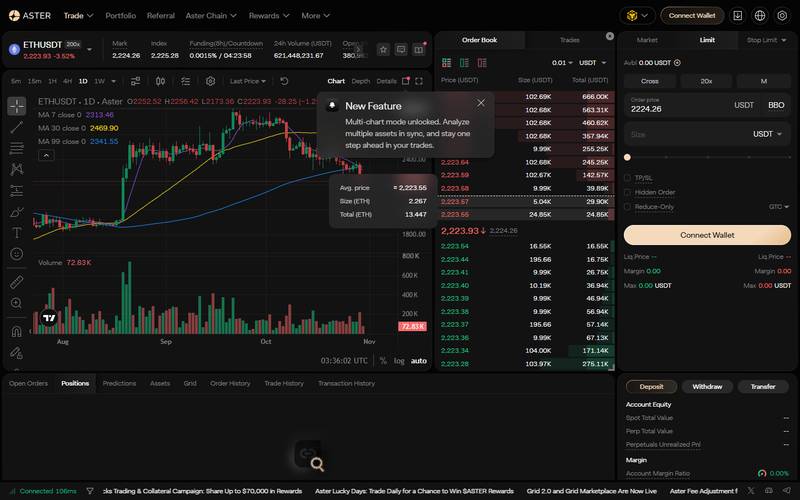
Confirm in MetaMask, your position appears in the Positions panel at the bottom.
Verdict: 3.6 / 5
Aster has built a technically capable perp DEX with genuine differentiators: Shield Mode privacy, yield-bearing collateral, and a broader market list including tokenized stocks and metals. The platform's usability, especially for traders coming from centralized exchanges, is genuinely good.
The DefiLlama incident is the reason we cannot rate Aster higher. Inflated volume metrics, if true, distort the liquidity picture traders rely on for order routing. Until Aster rebuilds a clean, independently verifiable volume history over multiple months, the headline numbers warrant caution.
If you trade here: start small, verify deposits and withdrawals behave predictably, and avoid 1001x mode unless you genuinely understand that a 0.1% adverse move equals a full liquidation.
Best for: Experienced derivatives traders who want CEX-grade UX on-chain, privacy features via Shield Mode, or yield on idle BNB via asBNB.
Skip if: You rely on published volume stats for liquidity assessment, you are new to leveraged trading, or you want to concentrate capital on a platform with an established independent track record.
Quick Links
- App:
aster.fi - Twitter/X:
@Aster_DEX - Documentation:
docs.aster.fi - ASTER token (CoinGecko): search ASTER
- Earn products:
aster.fi/earn - Double Harvest campaign: see official Twitter for current terms
Last verified: October 29, 2026. Leverage limits, supported assets, and token metrics change with protocol updates, verify current parameters in the live app before trading. This article is for informational purposes only and does not constitute financial advice. Leveraged trading carries extreme risk of total capital loss.
More From Review

4Dlabs (@4Dlabs_Official), Season 1 In-Depth Review & Airdrop Positioning Playbook
4Dlabs (4dlabs.space / dapp.4dlabs.space / @4DlabsOfficial) represents a vital infrastructure breakthrough at the intersection of Web3, robotics, and…
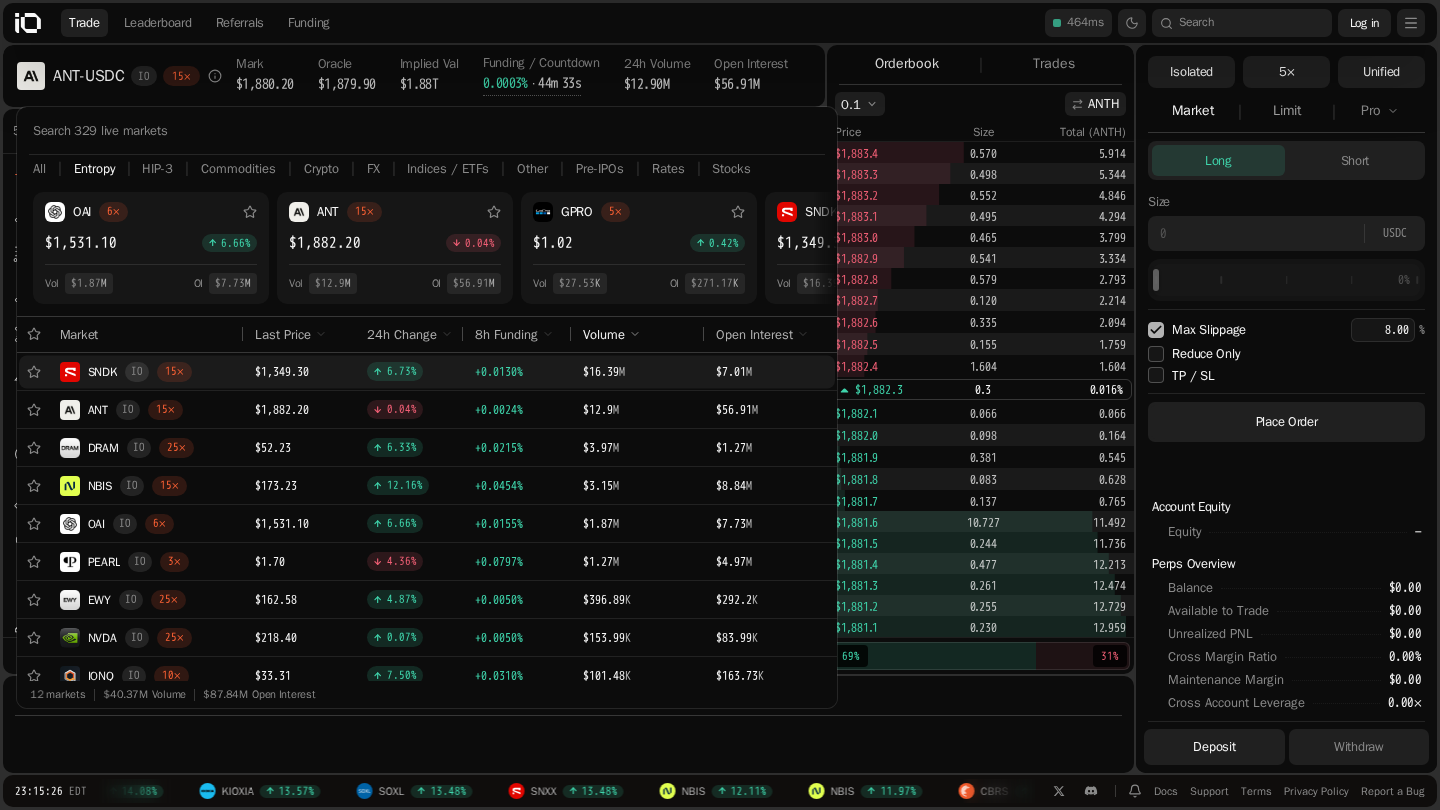
Entropy.io Review (2026): Markets, Trading Tools, Fees, and Risks
A hands-on look at Entropy.io’s public trading interface, with screenshots of pre-IPO, stock and ETF markets, plus fees, risks and competitors.
Perpl Review 2026: Complete Beginner’s Guide to the On-Chain Perps DEX
Perpl review 2026 covering its Monad-based on-chain order book, fees, leverage, liquidation risk, points, security, access limits, and competitors.
ZEC Review 2026: I Spent a Day with Zcash, The Privacy Coin That Invented zk-SNARKs
I went into this review expecting a niche privacy coin with a cult following and a dusty website. What I found was more complicated: a genuinely…
Predict.fun ($PREDICT) Airdrop 15 Oct 2026 – Comprehensive Review & Step-by-Step Execution Playbook
Using TinyFish CLI combined with a live login and real-money deposit into Predict Smart Wallet, the full operation and airdrop system of Predict.fun were…

Synthetix Perps Review 2026: Mainnet CLOB, Multi-Collateral, and Liquidation Risk
A practical Synthetix Perps review covering its Ethereum Mainnet CLOB, ETH and USDT margin, fees, funding, liquidation route, SLP vault, and trader risk.

Author
Akita Inu
Akita Inu covers fast-moving crypto market updates, exchange news, and token ecosystem developments for CoinLive, with a focus on concise source-led reporting.