


Federal Reserve Governor Denies Tariff-Inflation Link
NewsFederal Reserve Governor Stephen Miran addresses the link between tariffs and inflation, stating no material connection.

- Stephen Miran clarifies tariff impact on inflation.
- Tariffs not inflating core goods prices faster.
- No major crypto market reaction observed.
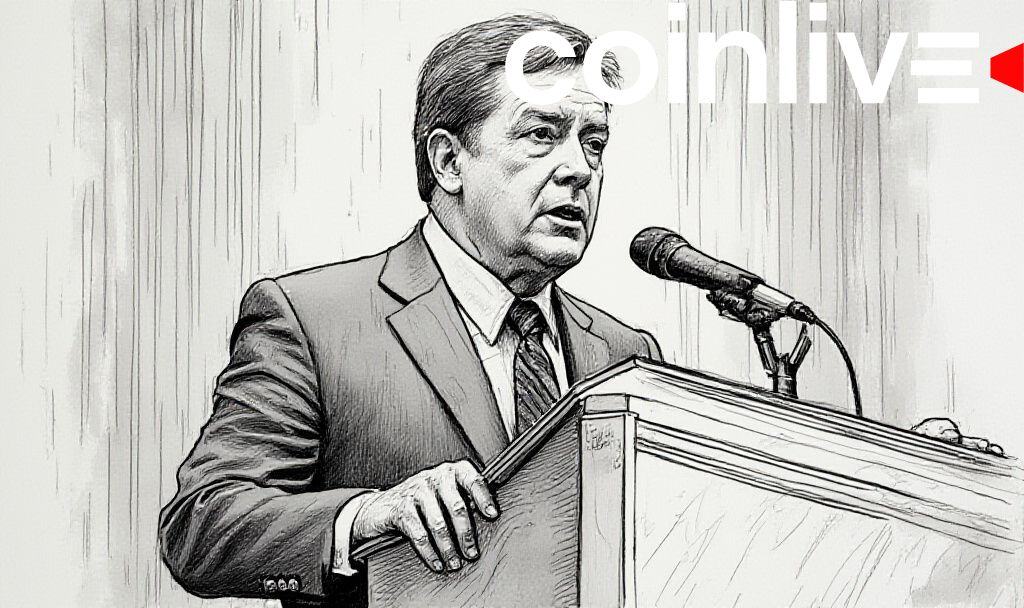
Federal Reserve Governor Stephen Miran discussed on CNBC that tariffs have not significantly impacted inflation rates in the U.S., counter to some economic expectations.
His remarks on tariff-induced inflation could shape future economic discourse but have shown no immediate impact on cryptocurrency markets or macroeconomic indicators.
Federal Reserve Governor Stephen Miran addressed the link between tariffs and inflation recently. In a CNBC interview, he stated:
“I don’t see any material inflation from tariffs. I see no evidence that it’s occurred. In my opinion, if you look at import intensive core goods, they’ve inflated at no faster rate than overall core goods.” – Stephen Miran, Governor, Federal Reserve
Miran, confirmed as a Federal Reserve Governor in September 2025, was speaking from personal observations without representing anyone else’s views. He emphasized that critical categories like import intensive core goods, have not shown higher inflation rates.
Market analysts noted that Miran’s comments did not immediately shift the financial landscape. The statement suggests that tariffs have not affected inflation, contrary to concerns about their broad economic effects.
Analysts observed stable financial environments following his remarks, signaling minimal immediate policy or market changes. The focus remains on more direct inflation contributors like monetary policy and commodity prices.
Miran’s statements did not ripple through the cryptocurrency markets, as core concerns primarily target traditional markets. Crypto spaces remain largely unaffected with no notable funding impact or DeFi shifts following his remarks.
Historical assessments align with Miran’s perspective, noting minimal inflation ties to tariffs since 2018. Analysts often cite supply constraints over tariffs as inflation drivers, stabilizing expectations and economic strategies.
More From Crypto News

Aster (ASTER) Rises 4.88% in 24 Hours: What the Data Shows
Aster (ASTER) is trading at $0.655837, up 4.88% over the past 24 hours, according to CoinGecko data as of 19:13 UTC on November 11, 2026.

Bitcoin Misses Stock Rebound as ETF Outflows Hit Day Four
Bitcoin failed to follow a broad equity rebound on November 11, trading near $73,993 while Nasdaq-100 futures climbed 1.7% after CoreWeave posted an earnings be...

OCC Clears Coinbase National Trust Company for Crypto Custody
The OCC issued its decision in CD-1370 , formally authorizing Coinbase National Trust Company to operate as a federally chartered trust bank focused on digital-...

Reported Ankr Ethereum Bridge Drain Exceeds $303,000, The Defiant Says
The Ankr Ethereum Bridge was drained of more than $303,000 in an exploit carried out across five transactions.

Binance CFO Steps Down After Reported Hack, Co-CEO Cites Planned Transition
Binance’s chief financial officer has stepped down, the exchange confirmed, with the departure landing nine days after the platform suffered what has been descr...

US Treasury Takes Action Against MEXC Over Alleged $16B in Sanctions-Linked Transactions
The Treasury press release identifies MEXC as the subject of the action and ties the exchange to transaction flows connected to three sanctioned or adversarial...
