


Trump Signs GENIUS Act, Pioneering Crypto Regulation
President Trump signs GENIUS Act, establishing first federal crypto regulation for stablecoins.

- Main federal crypto legislation signed by President Trump.
- Establishes regulatory clarity for stablecoins.
- Expected to attract institutional capital.
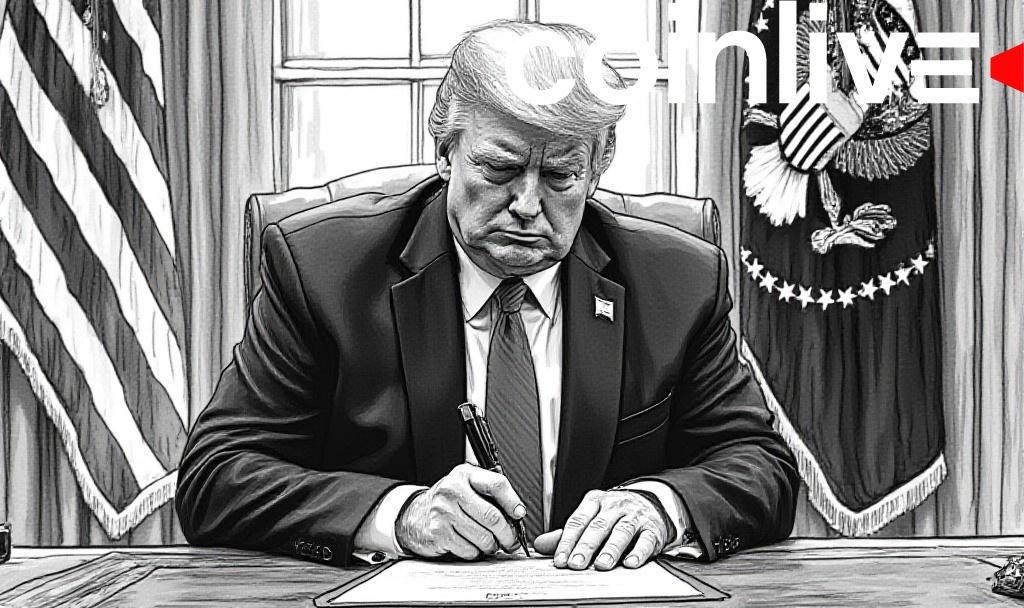
The GENIUS Act marks a pivotal moment for the U.S. crypto sector, providing stablecoin regulation and encouraging growth in digital finance innovation.
The GENIUS Act, signed by President Trump, represents a historic regulatory initiative. Trump emphasized this move aligns with his promise to strengthen U.S. digital finance. Stablecoins receive a significant focus, with 100% reserve backing mandated to bolster financial stability.
Prominent in the event, Caroline Crenshaw, an SEC Commissioner, stated that the Act lays groundwork for utilizing payment stablecoins in market systems. This development aims to enhance institutional trust and national security through robust crypto regulations.
Immediate market impacts are anticipated for stablecoin issuers such as USDC and Tether due to new regulatory standards. The broader crypto market, including DeFi protocols, may see shifting dynamics. These measures are likely to boost confidence in the U.S. digital asset framework.
On the financial front, the GENIUS Act’s introduction of stringent standards for dollar-backed stablecoins increases the appeal of the U.S. financial markets. This move is anticipated to influence DeFi activities by enhancing liquidity and reducing risks tied to stablecoins.
This legislation will be a revolution in financial technology since the birth of the Internet itself. — Donald J. Trump, President of the United States
Historical trends suggest that similar regulatory clarity can lead to increased crypto adoptions and investments. The GENIUS Act’s approach, focusing on federal regulation and security, might position the U.S. as a leader in the nascent digital economy, especially in the evolving financial technology sector.
More From Crypto News

贝莱德ETF钱包转入Coinbase 3215枚BTC与3.89万枚ETH|链上侦探
据 BlockBeats 10 月 23 日消息,链上监测平台 Onchain Lens 追踪到贝莱德旗下 ETF 钱包向 Coinbase 转入 3,215 枚 BTC 和 38,900 枚 ETH。报道援引合计约 3. 5563 亿美元,但未注明估值时点与价格口径,该金额暂视为参考数据而非独立核实结果。

Indian Exchange Denies Hack After $16M Suspicious Outflows
CoinDCX, India’s largest crypto exchange by reported user base, has denied suffering a security breach after blockchain investigators flagged approximately $16...

CZ Says AI Hacking Fears Miss a Bigger Crypto Risk
Binance founder Changpeng Zhao has pushed back on a growing narrative in crypto security circles, arguing that fears about AI-powered hacking may be distracting...

Bitcoin Eyes $85K: What the Charts Signal Next
Bitcoin is pressing toward the $85,000 area, a level that chart-watchers have flagged as the most closely monitored resistance on the current advance. Whether t...

CoinDCX $16M Hack Claims Challenged by Blockchain Investigators
Blockchain investigators are publicly accusing Indian crypto exchange CoinDCX of misrepresenting details of a reported $16 million hack, raising questions about...

Bitcoin ‘Goes to Zero’ After a Hack, Chamath Predicts
Venture capitalist Chamath Palihapitiya has predicted that Bitcoin could go to zero in the wake of a major hack, framing a credible security failure as the scen...
