


Trump Plans Talk with Xi Amid Trade Tensions
President Trump to speak with Xi Jinping over trade conflicts and tariffs.

- Main event, leadership changes, market impact, financial shifts, or expert insights.
- Trump seeks direct talks with Xi Jinping.
- Trade tensions create global market uncertainty.
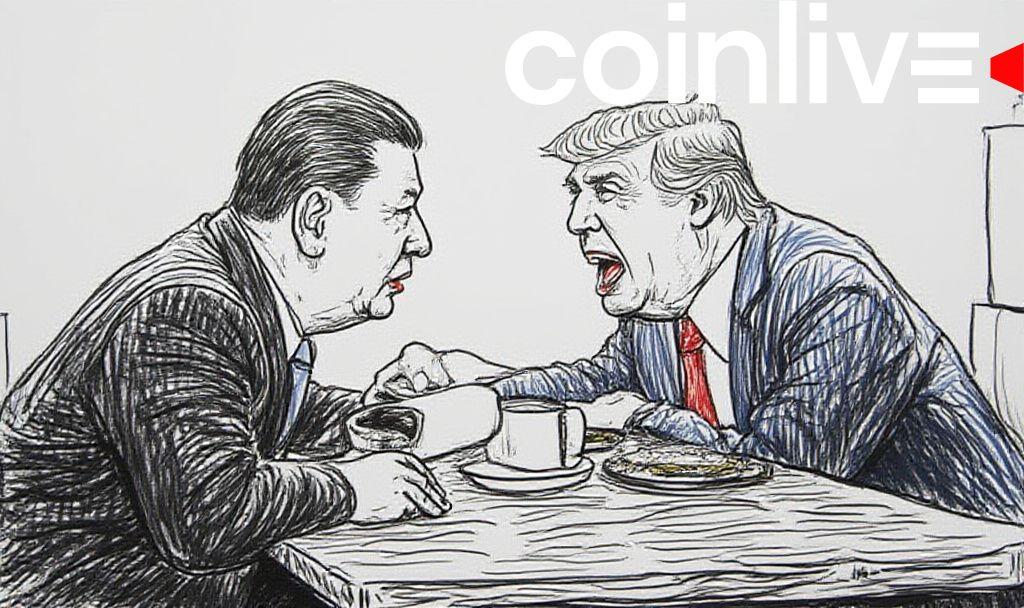
President Donald Trump has announced an intention to speak directly with Chinese President Xi Jinping amid escalating trade tensions between the U.S. and China. The conversation aims to address the ongoing tariff disputes affecting global markets.
This development is crucial as it reflects direct diplomatic engagement, bypassing traditional channels, at a time of heightened trade conflict and tariffs impacting international trade dynamics.
Ryan Hass, Former Director for China, Taiwan, and Mongolia, National Security Council, observed, “The channels don’t work because Trump doesn’t want them to. Trump prefers to negotiate directly with President Xi, similar to his approach with President Putin. He doesn’t seem particularly keen on delegating the expression of his views to others.” – source
President Trump has reaffirmed his strategy of direct negotiations with Chinese President Xi, emphasizing a personal approach similar to his dealings with President Putin. Recent confusion arose after Trump claimed a phone call with Xi, later contradicted by Chinese officials.
Trump’s direct approach signals potential shifts in global trade dynamics. Financial markets remain uncertain, with imposed tariffs affecting supply chains. Diplomatic insiders express skepticism over the touted resolution timeline, citing complexities in tariff negotiations.
Trade tensions between the U.S. and China have increased following escalating tariffs affecting various industries. The global market impact is substantial, causing disruptions in supply chains and economic forecasting. Businesses are bracing for continued volatility amid these diplomatic maneuvers.
The ongoing U.S.-China trade conflict risks straining political and economic relations, potentially reshaping alliances in Asia as China seeks new partnerships. The absence of a U.S. ambassador to China highlights the communication gap amidst these high-level talks.
The potential conversation may lead to financial and regulatory outcomes affecting international markets, as seen in previous negotiations. Historical trends of direct leader engagement illustrate potential market volatility, rooted in uncertainties over future tariff arrangements.
More From Crypto News

Intel, Oracle and IBM Object to OKX–ICE Tokenized Stock Plans
Intel, Oracle, IBM and IonQ have formally objected to the OKX–ICE tokenized stock plans, according to an October 26 public notice published by OKXICE — the join...

Ark Invest Buys Circle Shares, Sells Bitcoin ETF as BTC Falls
The two moves point in opposite directions within the crypto-linked investment space. Ark added exposure to Circle, the USD Coin issuer and stablecoin infrastru...

Ripple Approved to Operate as a U.S. National Trust Bank
A national trust bank is a federally chartered institution authorized to provide trust and fiduciary services, including asset custody, without engaging in comm...

Ethereum Foundation’s Latest ETH Sale Draws Criticism
The Ethereum Foundation has drawn fresh criticism following its latest sale of ETH, with observers describing the timing and communication around the transactio...

Strategy Pauses Bitcoin Buys as STRC Buybacks Continue
Strategy’s latest weekly update showed no new Bitcoin purchase reported, while the company continued repurchasing shares of its STRC preferred stock. The diverg...

Bitcoin Tests $80K as $550M Crypto Liquidations Hit
Bitcoin is testing the $80,000 support level as reports of roughly $550 million in crypto liquidations circulate across market data platforms. Whether BTC can h...
